You’re definitely not the only one who feels nervous about traditional veneers. Tons of people want that Hollywood smile, but the idea of shaving, filing, or removing enamel freaks them out. That’s why **no prep veneers** are suddenly a big deal.
They sound pretty dreamy: a bright, straight smile with barely any impact on your real teeth. It’s tempting! But—let’s be real—there are catches.
No prep veneers can work really well if you’re the right candidate. Some people see incredible, natural results. Others? Their teeth end up looking boxy, and sometimes there’s instant regret. So, you need the facts.
What Are No Prep Veneers?
No prep veneers are super-thin shells glued right onto the front of your teeth. The main difference from regular veneers? They rarely need any enamel removed—sometimes none at all.
You’ll hear them called all sorts of things: no-prep, prep-less, no shave, non-invasive, low-prep… you get the point.
Porcelain is usually the material of choice. It looks natural, shines like real teeth, and holds up well.
What Makes No Prep Veneers Different?
Honestly, lots of people get confused here.
1) Traditional Dental Veneers
With regular veneers, dentists shave down a thin layer of enamel first. That’s how the veneer sits flush and doesn’t look chunky.
Traditional veneers usually work best for:
* tough stains
* crooked teeth
* uneven sizes
* damaged enamel
* big smile overhauls
They’re sometimes called full prep or standard porcelain veneers.
2) No Prep Veneers
Dentists barely touch your enamel (sometimes not at all) for these. No prep veneers are thinner and bonded straight onto the tooth. So, less drilling, less pain, fewer changes, and often no need for anesthesia.
But here’s the thing: because no enamel’s removed, they can look or feel bulky if the dentist isn’t careful.
That’s why you really need someone who knows what they’re doing.
Do No Prep Veneers Mess Up Your Real Teeth?
It’s a huge concern and totally fair.
In most cases, **no prep veneers** don’t damage your teeth if done correctly. Your enamel stays pretty much intact.
But “non-invasive” doesn’t mean “no risk.” Problems crop up when:
* veneers are too thick
* your bite shifts
* bonding is sloppy
* your oral hygiene slips
* the dentist isn’t skilled
Even minimal prep veneers lock onto your teeth for life. They’re not some quick Instagram filter you can peel off.
Are Drill-Free Veneers Real?
Yep—there are people who genuinely get veneers without any drilling. But it only works if you:
* have small teeth
* gaps between teeth
* slightly worn or naturally thin teeth
* just minor cosmetic flaws
If your teeth stick out or are crowded, tacking on extra porcelain can leave you with that “horse teeth” vibe.
Good dentists check everything—shape, bite, enamel, gums, even your face—to make sure it’ll work. Some even use digital smile design software before they start.
Types of No Prep Veneers
They’re not all created equal.
1. Porcelain No Prep Veneers
These are the go-to for a reason. Here’s why people like them:
– Tough to stain
– They actually look like real teeth
– Stick around for years
– Seriously strong
What’s not so great? Well, they’re expensive, and while they don’t require shaving down your teeth as much, once they’re on, it’s pretty much a forever thing.
2. Composite Minimal Prep Veneers
These use resin instead of porcelain. Here’s what you get:
– Costs less
– Done fast
– Easy to fix if something goes wrong
Downsides? Resin picks up stains faster, doesn’t last as long, and has a bit less shine than porcelain.
3. Snap-On or At-Home Veneers
You’ve probably seen these online. They’re plastic trays you pop over your teeth.
Honestly? They’re not real veneers.
They’re fine for:
* photoshoots
* weddings
* quick social moments
But they can:
* mess up your speech
* trap bacteria
* look fake
* snap easily
If you want real veneers, go to a licensed dentist.
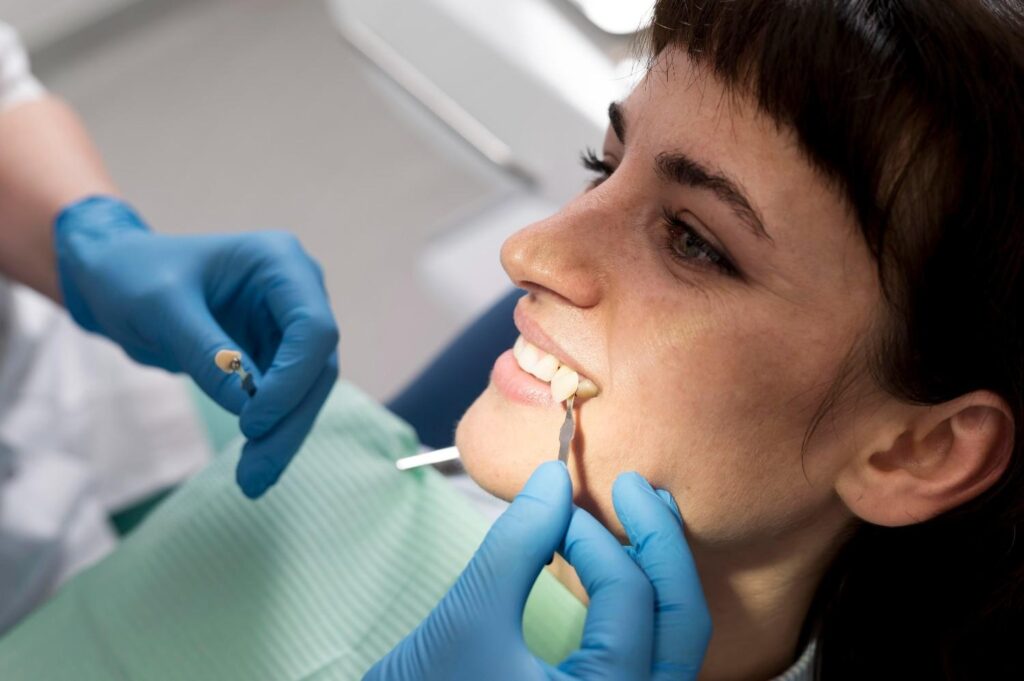
Who Should Get No Prep Veneers?
You’re a good fit if you have:
- healthy teeth/gums
- minor stains
- small gaps
- short teeth
- somewhat uneven teeth
- solid oral hygiene
You’re not a good fit if you have:
- severe crowding
- big fillings
- gum disease
- grind your teeth
- teeth that stick out
- weak enamel
Sometimes, full prep veneers just make more sense for lasting results.
And a good dentist won’t just push the pricier option—they’ll tell you straight.
How the No Prep Veneer Procedure Works
Step 1: Consultation
Dentist checks your smile, bite, gums, enamel. Might do photos, X-rays, scans.
Step 2: Smile Design
Some places show you a digital preview beforehand. This helps avoid surprise outcomes.
Step 3: Minimal or No Tooth Prep
Your teeth are often untouched. Sometimes there’s a tiny tweak for a better fit.
Step 4: Impressions
Dentist takes molds or scans. Veneers are custom-made at the lab.
Step 5: Bonding
They stick the veneers on with strong cement and a curing light. Then check your bite, comfort, shape, color, and symmetry.
How Long Do No Prep Veneers Last?
Porcelain ones last about 10–15 years, sometimes longer if you care for them. Composite types? Around 4–7 years.
It depends on:
* how you brush/floss
* if you grind your teeth
* smoking
* diet
* your dentist’s skill
Chewing ice with veneers? Yikes. Don’t.
Pros of No Prep Veneers
1) Less Enamel Removal
Number one perk. Your teeth stay almost as they are.
2) Minimal Pain
Most folks skip anesthesia—no big deal.
3) Quick Recovery
Usually, zero sensitivity afterward.
4) Natural Look
Good porcelain is hard to spot.
5) Sometimes Reversible
A little prep means, in some cases, you can go back. Not always, though.
Cons of No Prep Veneers
1) Not for Everyone
Some smiles just need more prep.
2) Bulky Look
Bad planning = chunky teeth.
3) Price
No prep isn’t cheap. Porcelain still costs a lot.
4) Bite Issues
Poor placement can mess with chewing.
You Still Have to Maintain Them
Veneers aren’t set-and-forget. You’ll need to:
- brush
- floss
- see your dentist
- wear a night guard if you grind
How Much Do No Prep Veneers Cost?
Depends on where you live, who’s doing it, and material.
Per tooth, roughly:
Composite veneers: $250–$1,000
Porcelain no prep: $800–$2,500
Traditional veneers: $1,000–$3,000
Cheap veneers can be a nightmare down the road.
Cosmetic dentistry isn’t the place to chase discounts.
Are “No Dentist” Veneers Safe?
Not really.
Online kits skip the basics: exams, bite checks, gum health. That’s risky.
Cosmetic issues can hide bigger problems like decay, gum disease, or infections. You need a professional, not a quick fix.
Can You Get Veneers for Free?
Not easily. Sometimes through:
- dental schools
- charity programs
- clinical trials
- nonprofit organizations
- military coverage (rarely)
Insurance usually doesn’t cover cosmetic veneers.
No Prep vs Minimal Prep Veneers
People mix these up, but they’re not identical.
No Prep Veneers:
No enamel removal, ultra-thin, best for small fixes, can look bulky, often reversible
Minimal Prep Veneers:
Tiny bit of enamel removed, slightly thicker, fit for bigger corrections, more natural fit, less likely reversible
Sometimes a little prep actually gives you a better result.
Modern Veneer Tech: What’s New
Veneers now are way better than the old days. We’ve got:
- digital smile previews
- ultra-thin ceramics
- AI planning
- stronger adhesives
- smarter, gentler techniques
Dentists can create more natural, durable smiles while saving your tooth structure. That’s why modern minimal-prep veneers are such an improvement over old-school ones.
The Bottom Line
No prep veneers can totally change your smile with minimal drilling and enamel loss. For some people, they’re perfect: natural results, less discomfort, gentle treatment.
But they’re not one-size-fits-all. Sometimes you need minimal-prep, traditional veneers, ortho first, or gum treatments.
Pick a qualified cosmetic dentist who cares about your oral health, not just how you look.
And really? A beautiful smile should work as well as it looks—forget flashy Instagram shots.
Quick FAQs
Are no prep veneers permanent?
They’re semi-permanent—bonded tight, but sometimes reversible.
Do they hurt?
Most people feel little or no pain.
Can they ruin your teeth?
Only if done badly. Good planning keeps your teeth safe.
Do they stain?
Porcelain resists stains. Composite doesn’t.
Can you whiten veneers?
Nope. Pick your color before they go on.
Are “non permanent” dental veneers real?
Usually not. Removable covers = not true veneers.
Which is better: no prep or traditional?
Depends on your teeth and goals. There’s no universal answer.