
Maybe you’re chomping popcorn, biting into an apple, or you bump your mouth by accident. Suddenly, something feels weird. Your tongue keeps finding a rough spot, or maybe you even hear a tiny crack. And now you’re thinking, “Wait—did I just chip my tooth?”
If you just chipped a tooth, you’re definitely not alone. This happens to millions of people every year. Sometimes the damage is so tiny you barely notice. Other times, a big piece breaks off and there’s pain, sensitivity, and now you’re worried.
But here’s some good news—not every chipped tooth is an emergency. Dentists have lots of ways to fix these things, from smoothing out a rough edge to bonding or covering it with a crown. The sooner you know what’s going on, the easier it is to keep your smile looking good.
What Is a Chipped Tooth?
A chipped tooth just means that a part of your tooth’s outside layer broke off. Maybe it’s just the enamel, maybe it goes deeper.
Picture your tooth like an egg. The enamel is the shell—a tough outer layer that protects everything inside. It’s the hardest thing in your body, but it’s not invincible. Bite too hard, get hit in the mouth, let a cavity spread, or just wear it down over the years, and a piece can snap off.
Chips can happen to any tooth—front teeth (the easy-to-see ones), canines, premolars, or molars. Maybe it’s just a spot your tongue catches on, or maybe part of the tooth breaks enough that you can feel it when you chew.
Sometimes a chip is so deep it hits the next layer, or even the nerve, and that’s when things can get pretty painful.
Not Every Chip Looks the Same
Chipped teeth come in all shapes and sizes. You might see:
– A small, rough edge on a front tooth
– A missing corner
– Part of a molar gone
– A sharp sliver that cuts your tongue
– Even a crack with a chunk missing
So if someone says, “My tooth chipped a little,” or, “A chunk just broke off,” both situations need attention. Even a small chip can get worse if it’s ignored.
Signs You Chipped a Tooth
Sometimes, it’s obvious. Other times, you’re just not sure.
One of the top things dentists hear: “How do I know if I chipped a tooth?” Well, it depends on how big the damage is and where it’s at.
Common Signs:
– A rough or sharp tooth edge
– A missing piece
– Pain when biting
– Sensitivity to hot, cold, or sweets
– Mild toothache
– Gum swelling near the area
– Food getting stuck there
– Trouble chewing
If you’re not sure, run your tongue over your teeth. If you find a rough patch where it used to be smooth, your enamel might be chipped.
How To Tell If You Chipped a Tooth:
– Check in a bright mirror. Compare your teeth, left and right.
– Feel for a sharp or rough spot with your tongue.
– Notice if cold drinks make one tooth ache all of a sudden.
– Pay attention if food always catches in one place.
Don’t keep poking at it or biting hard foods to check! If you suspect a chip, it’s smart to get it looked at by a dentist. Small chips are hard to see without good lighting.
What Does a Chipped Tooth Feel Like?
Everyone’s experience is a little different.
If it’s a tiny chip, you might not feel a thing. If it’s deeper, it can really hurt. People often describe it as:
– Rough or sharp
– Jagged
– Uneven
– Sensitive
– Annoying when their tongue brushes it
If it’s just enamel:
– No pain, just a bit rough
– Maybe it looks odd
If the chip is deeper—into the dentin:
– Sharp pain with cold or sweets
– Mild pain while chewing
– Increased sensitivity
If you’ve hit the nerve:
– Serious toothache
– Throbbing
– Pain that won’t quit
– Sometimes swelling or bleeding
– Hard to chew
If you’ve got severe pain or swelling, or the tooth keeps bleeding, call your dentist soon.
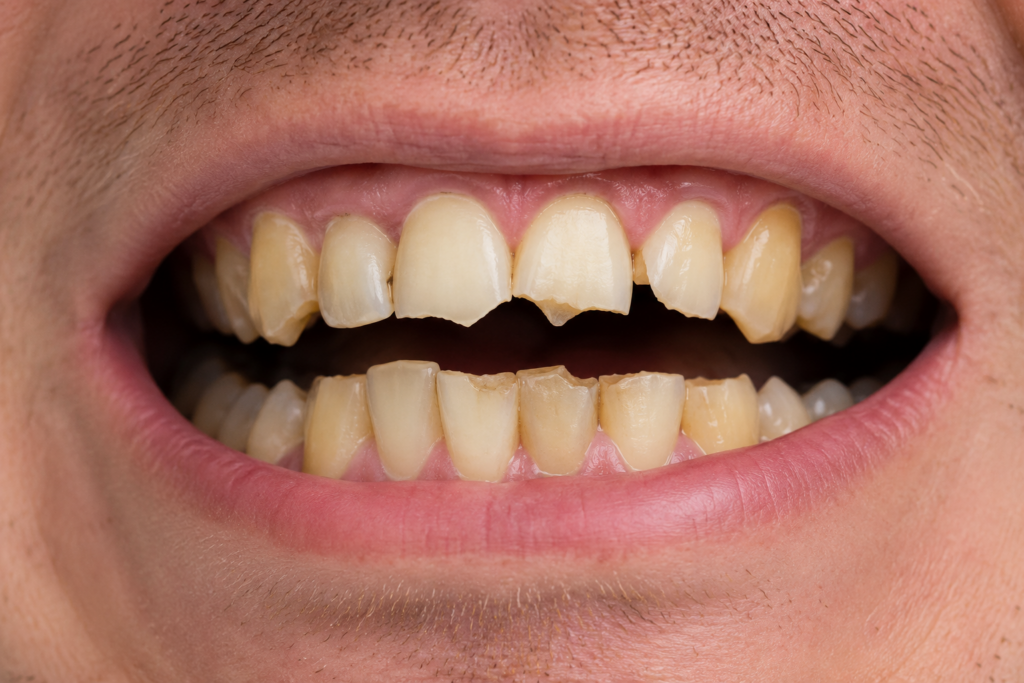
Types of Tooth Chips
Chipped teeth aren’t all the same, and dentists sort them out by how bad the damage is.
1. Minor Enamel Chip
Just a tiny bit missing. Usually painless and just feels a little rough. Many people don’t spot them until their tongue finds the area.
2. Moderate Chip
A bigger chunk is gone, maybe with some sensitivity or pain. There’s a sharp edge or visible damage. These usually need bonding or some kind of restorative work.
3. Deep Chip
The chip goes close to or into the nerve. This is more serious—paints, bleeding, or trouble chewing. Sometimes it will need a crown or root canal.
4. Chipped Tooth with a Crack
Sometimes you get a chip *and* a crack underneath. These can be tough to spot without X-rays, which is why seeing the dentist matters.
5. Tooth Broken Below the Gumline
The most severe. The break goes deep below the gums. Fixing it might require more complicated work—sometimes even extraction if the tooth can’t be saved.
What Can Cause a Chipped Tooth?
Most people think you have to take a big hit for a tooth to chip, but that’s not always true. Everyday habits and gradual wear play a big part.
Here’s what’s most likely to cause it:
1) Biting Hard Foods
Ice, hard candy, popcorn kernels, uncracked nuts, fruit pits—even bread crusts can catch you off guard. Even some healthy foods for your teeth can cause a chip if you accidentally bite down on a hard pit or seed.
2) Sports Injuries
Getting hit in the mouth during football, basketball, cycling, or martial arts—without a mouthguard—can break a tooth easily.
3) Falls and Accidents
Slipping on a floor, falling off a bike, or a playground spill can do it. Kids and seniors are especially at risk.
4) Teeth Grinding at Night
Grinding or clenching can slowly wear away the tooth, setting it up for a chip.
5) Tooth Decay
A cavity weakens the tooth from the inside. Sometimes the tooth “just breaks” on something soft because decay left barely any structure.
6) Old Dental Fillings
A big, old filling can make the tooth around it fragile, raising the risk of a chip.
7) Sudden Temperature Changes
Rare, but jumping from hot coffee to ice water can stress weak teeth, especially if they already have fillings or thin enamel.
Why Are My Teeth Chipping and Breaking?
If you keep chipping teeth, it’s time to ask: “Why do my teeth keep breaking?” Here’s what’s going on most of the time:
– Thin or worn enamel, especially as you get older
– Grinding teeth at night
– Untreated cavities hollowing teeth from the inside
– Acid erosion from soda or reflux
– Not enough vital nutrients
– Years of wear and tear
– Large fillings or old dental work shifting the way your teeth bite together
If you notice a pattern, don’t ignore it—repeated chipping usually means there’s an issue your dentist can help solve.
Dentist Treatments for a Chipped Tooth
Treatment depends on how big the chip is, where it is, if the nerve’s involved, and what you want it to look like when finished.
Most common treatments include:
1) Smoothing and Polishing
For tiny chips and rough edges. The dentist just buffs and shapes the area. Takes 10–20 minutes.
2) Dental Bonding
Super common, especially for front teeth. Dentist uses a tooth-colored resin that’s molded and cured with a special light. Quick, looks natural, and usually done in one visit.
3) Dental Veneers
Recommended for cosmetic fixes and bigger chips on front teeth. A thin porcelain shell covers the tooth. Looks great but needs a little enamel removed.
4) Dental Crown
If a large part is broken, a crown can cover the whole tooth. Restores strength and makes it look normal again. Best for molars, big fillings, or deep fractures.
5) Root Canal Treatment
If the pulp is exposed or infected—serious pain, swelling, or the tooth turns gray—the dentist will clean out the nerve, then seal and protect the tooth, usually with a crown.
6) Tooth Extraction
Last resort. If the break goes under the gums or the tooth can’t be fixed, it needs to come out. There are different ways to replace it: implants, bridges, or partial dentures.
Home Care for a Chipped Tooth
While you wait to see the dentist, you can help yourself:
– Rinse with warm salt water
– Eat soft foods, chew on the other side
– Brush gently and keep the area clean
– Cover a sharp spot with dental wax if needed
– Take over-the-counter pain meds—if it’s safe for you
Frequently Asked Questions (FAQs)
Q. Can a chipped tooth heal on its own?
Nope. Unlike skin, enamel can’t regrow. A chipped tooth will need to be monitored or repaired by your dentist.
Q. Is a small chipped tooth an emergency?
Usually not. If you’re not in severe pain and there’s no heavy bleeding, call your dentist within a day or so. Still, don’t ignore it—the chip can get bigger.
Q. What should I do right after chipping my tooth?
Rinse with warm water. If you can, save any broken pieces. Put a cold compress on if you’re swollen. Don’t chew on the broken side. Call your dentist.
Q. Can I eat with a chipped teeth?
Yes, but stick to soft foods. Stay away from hard foods, ice, nuts, sticky candy, or popcorn. These can make things worse.
Q. Does a chipped tooth always hurt?
Not always. If it’s just the enamel, most people feel nothing. Pain happens when the dentin or nerve is exposed.
Q. Can a dentist fix my chipped tooth in one visit?
Often, yes—for minor chips that need polishing or bonding. Crowns and veneers usually take more than one appointment.
Q. Can I just leave a chipped tooth untreated?
Not a good idea. Even if it doesn’t hurt, a chip is an easy spot for bacteria to hide, which can lead to cavities, sensitivity, or bigger breaks.
Q. How long does dental bonding last?
With good care, between 3 and 10 years. It depends on your bite, your hygiene, your eating habits, and if you grind your teeth.
Q. Will dental insurance cover a chipped teeth?
A lot of plans cover necessary dental repairs, but it really depends on your plan and whether they see it as a cosmetic or restorative procedure. Call your insurer ahead of time just to be sure.
Q. Can stress cause chipped teeth?
Not directly. But stress can lead to grinding and clenching at night, which will put you at greater risk over time.
When Should You Call a Dentist Right Away?
Sometimes you do need help fast. Call your dentist right away if you notice any of these:
– Intense or throbbing pain
– Bleeding that just won’t stop
– Swelling in your face or gums
– A large piece of your tooth missing
– Your tooth feels loose after an accident
– Signs of infection, like pus, a bad taste in your mouth, or a fever
– You’re having trouble chewing because of the injury
Getting help fast gives you a much better shot at saving your tooth and dodging more serious problems.
Final Thoughts
Pretty much everyone chips a tooth at least once. It happens when you’re eating, during sports, after a fall, or even biting into something you thought was safe.
Don’t panic. Even if only a tiny piece broke off, see your dentist. Catching it early stops a small deal from becoming a big problem. With modern dental treatments, chipped teeth are usually easy to fix—and no one will be able to tell the difference.
Take care of your teeth and don’t shrug off a chipped tooth. If you’re not sure what you’re dealing with, call your dentist anyway. When it comes to your smile, it’s always better to be safe.




[…] chipped tooth, a weird gap, or that one spot of discoloration—doesn’t take much to make you feel uneasy about […]
[…] fillings are most often used to repair cavities, but they’re handy for fixing small chips, cracks, worn areas, and other minor cosmetic problems. Dentists use them on both front and back […]