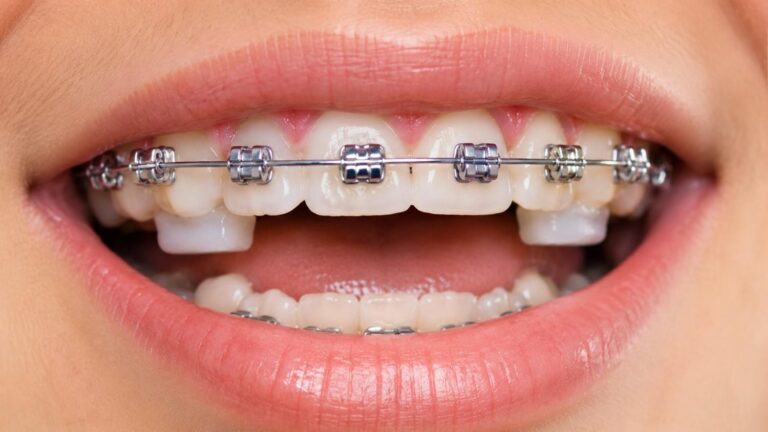
Missing teeth change how you eat and speak, and they can make you self-conscious about talking or laughing. Losing even one or two is enough to make ordinary things feel different.
You don’t always need a full set of dentures or implants. Partial dentures are a common choice for people who have lost one or more teeth but still have healthy natural teeth left. They fill the gaps, sit around the teeth you still have, and bring back some of your smile and chewing ability.
The questions that come up most are whether partials are comfortable, whether you can get one for a single missing tooth, what happens when several back teeth are gone, and what it all costs. This guide covers the types, materials, fitting process and daily care.
What are partial dentures?
A partial denture is a removable appliance that replaces one or more missing teeth while leaving your remaining natural teeth in place. Artificial teeth sit on a gum-colored base, and depending on the design, metal clasps or special attachments hold the appliance in position.
People also call them dental partials, partial plates, removable partial dentures or partial teeth.
A full denture replaces every tooth in the upper or lower jaw. A partial fills selected gaps only. If you have lost two lower molars but still have your front teeth and other back teeth, your dentist may suggest a lower partial.
They can replace a single tooth, two or more teeth, several front teeth, missing upper or lower back teeth, or teeth on both sides of the mouth. The design depends on your oral health, the teeth you have left, and where the gaps are.
How they work
A partial fills the space left by missing teeth and takes support from your remaining teeth and gums. Most designs have three parts: the artificial teeth, matched to your own; a base in pink acrylic or another material that looks like gum tissue; and clasps or attachments that connect the appliance to selected natural teeth.
In your mouth, the partial rests on your gums and hooks onto the supporting teeth, which lets you chew, speak and smile more easily. Fit matters here. An appliance that doesn’t fit properly shifts while you eat or talk and can irritate your gums.
Types of partial dentures
1) Acrylic partials
Acrylic partials are made from pink plastic with artificial teeth set into the base, sometimes with small metal clasps. They are usually the cheapest option, work for one tooth or several, are relatively easy to modify, and are often used as temporary dentures. They can also feel bulky, may break if you drop them, and can put pressure on the supporting teeth and gums when the design is poor. They’re the option most people consider first when they want a cheaper replacement tooth.
2) Metal partials
Metal partials have a thin framework in a strong alloy such as cobalt-chromium, with acrylic and artificial teeth attached to it. They are strong, usually thinner than acrylic, stable, and often suitable for long-term use. They cost more than basic acrylic dentures, the clasps can be visible, and repairs or modifications are harder. If you need to replace several teeth and want something solid that you take out yourself, a metal partial is one to raise with your dentist.
3) Flexible partials
Flexible partials are made from thermoplastic materials, often nylon-based resins, and bend a little to follow the shape of your mouth. Many use gum-colored clasps instead of metal ones. They are light, look natural, and often show no metal, and some patients find them comfortable. They can be hard to repair, don’t suit every pattern of missing teeth, and are difficult to adjust when the fit changes.
Flexible isn’t automatically better than metal or acrylic. Whether the design gives your teeth enough support is a decision for your dentist.
4) Precision partials
Precision partials connect to supporting teeth or crowns with special attachments instead of relying only on visible clasps. They look more discreet and can hold well, but they usually need extra dental work and cost more than conventional partials.
Partial Dentures for Front and Back Teeth
Where your teeth are missing changes which design works.
Front teeth
Missing front teeth affect how you look, how confidently you speak, and whether you can bite into food. Partials for the front replace incisors or canines and are matched to the shape and color of your natural teeth. Acrylic, flexible and metal-framework designs all work here.
For a single missing front tooth you can get a small partial, often called a dental flipper. If you are missing four front teeth, a custom partial can replace all four as long as there is enough support and space. Your dentist will look at your gum shape, tooth color, bite and the position of the remaining teeth to get a natural result.
Back teeth
Premolars and molars do the chewing and grinding, so losing them makes eating harder, especially with tougher food. Posterior partials replace teeth toward the back of the mouth and may be made for the upper jaw, the lower jaw, or one side. Two missing lower molars need a different design from several missing upper back teeth. When there are no natural teeth behind the gap, your dentist has to plan carefully where the partial gets its support and how it stays steady while you chew.
Materials
- Acrylic resin, the pink plastic used in many affordable and temporary partials.
- Cobalt-chromium, a strong alloy used for frameworks.
- Nylon-based resin, used in flexible partials.
- Dental acrylic, used for the replacement teeth.
Your dentist weighs the number of missing teeth, the support available, appearance, comfort and your budget.
How Are Partial Dentures Made?
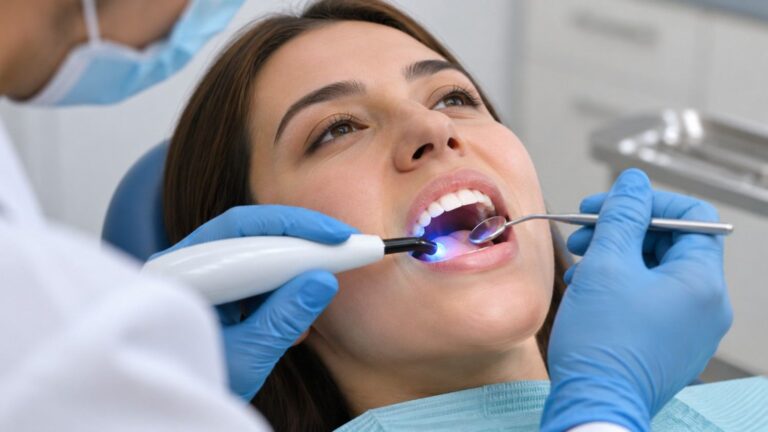
- Examination. Your dentist checks the remaining teeth, gums and bite, and may take dental x-rays of the supporting teeth and jaw. Untreated cavities or gum problems usually need treatment first.
- Impressions or digital scans. Your dentist records the shape of your mouth with impression material or a scanner so the lab can build an appliance that fits.
- Design. The dentist decides where the replacement teeth sit and how the partial connects to your natural teeth.
- Setting the teeth. A technician arranges the teeth on a trial base, and your dentist checks position and appearance before approving the design.
- Final construction. The lab makes the partial in your chosen material, finishes and polishes it, and sends it back to the clinic.
- Fitting and adjustments. Your dentist checks comfort, stability, appearance and bite, then adjusts any small pressure points.
The whole process usually takes a few weeks, depending on the type of denture and the lab.
Getting used to them
New partials take time. In the first few days you may notice more saliva, a bulky feeling, mild pressure on the gums, trouble with some words, and difficulty eating. Most of this settles as your mouth adjusts.
Start with soft food, cut meals into smaller pieces, and chew slowly on both sides. Reading aloud helps with speech. Ongoing pain, bleeding or sores are not part of adjusting, so call your dentist.
Inserting, removing and cleaning
Wash your hands first, check the partial is clean, and guide it into place over the right area with your fingers, then secure the clasps the way your dentist showed you. Never bite it down to force it in, since that can bend or break the attachments.
To take out an upper or lower partial, release the clasps or attachments the way your dentist demonstrated. Don’t pull hard from one side or bend the frame. If an upper partial feels stuck, skip the sharp tools and the force, and ask your dentist to show you the technique again.
Cleaning:
Rinse the partial after meals when needed.
Brush it gently with a soft denture brush and a suitable denture cleaner.
Brush your remaining teeth with fluoride toothpaste.
Clean your gums and tongue every day.
Store it as your dentist advises.
Hot or boiling water can distort some denture materials, so keep the partial out of it. Most removable partials come out at night unless your dentist says otherwise.
Common Partial Denture Problems
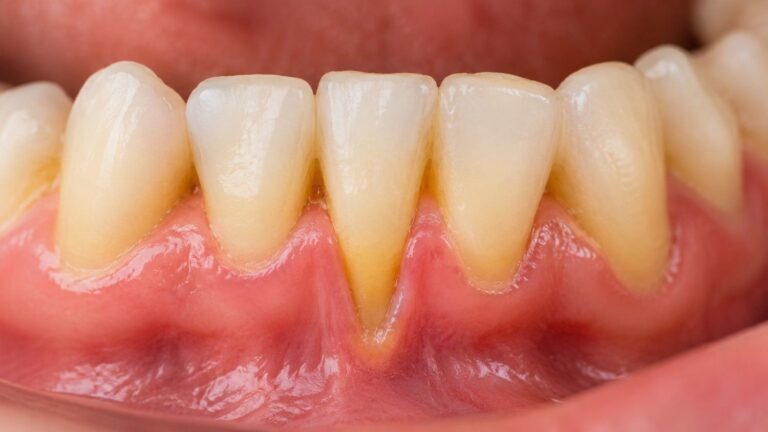
Sore gums are common with a new partial or a poor fit, and an adjustment usually settles them. Partials loosen over time as gums and supporting teeth change. Chewing takes practice, and some words are awkward at first. Food collects around the appliance and the teeth it hooks onto, which is why daily cleaning matters. Dropping a partial or putting too much pressure on it can break teeth or clasps.
If your partial becomes loose, painful or broken, see your dentist. Household glue and home bending of clasps cause more damage than they fix.
Can You Add a Tooth to an Existing Partial Denture?
In many cases a dentist and lab can add a tooth to an existing partial, so if you lose another tooth the appliance can be modified to fill the new gap. Whether it’s possible depends on the material, design and condition of the partial. Flexible and metal-framework designs can be more complicated to change, and your dentist needs to see the appliance before deciding.
Cost
Several things drive the price: the material, how many teeth are being replaced, the design, lab fees, and the clinic. Basic acrylic partials cost less than metal-framework or precision partials, and flexible partials often cost more than acrylic. One tooth needs a simpler appliance than four teeth or several back molars. The total may also cover examinations and X-rays, extractions or other treatment, impressions and lab work, fitting appointments, and follow-up adjustments and repairs.
Does Dental Insurance Cover Partial Dentures?
Some dental insurance plans cover part of the cost of removable partial dentures, but benefits and limits vary. Ask your insurer about coverage, waiting periods, annual limits, and whether you need pre-authorization before treatment.
For a lower price, compare estimates from several clinics, ask specifically about basic acrylic options, ask whether payment plans exist, and look into dental school clinics, which offer these services. The cheapest partial isn’t automatically the best one. A well-fitted appliance prevents discomfort and further dental problems.
Partials compared with bridges and implants
Partials are removable and replace one or more teeth. They usually cost less up front than implants and can cover several gaps at once. Dental Bridges are fixed restorations supported by neighboring teeth or implants, and you don’t take them out. Implants are placed in the jawbone and can support crowns or implant-supported dentures; they need surgery and enough bone. If you’re considering dental implants as an alternative to partial dentures, you may also want to learn whether dental implants hurt and what to expect during recovery.
Which Option Is Better?
Which one is right depends on your oral health, budget, how many teeth are missing, and what you prefer. If you want something removable and cheaper up front, a partial may suit you. If you’d rather have a fixed replacement, a bridge or implant is worth discussing. Your dentist can compare the drawbacks and the long-term maintenance for each.
Questions people ask
Q. How many teeth do you need for partial dentures?
There’s no fixed number. You need enough healthy supporting teeth and suitable gums to hold the appliance, which is what your dentist assesses.
Q. Can you get a partial for one missing tooth?
Yes. A small partial, often called a flipper, replaces one missing tooth in suitable cases.
Q. Are partial dentures removable?
Yes, that’s the design. You take them out for cleaning and maintenance.
Q. Are flexible partials better than acrylic?
Not necessarily. Flexible partials can look more natural and feel lighter; acrylic is cheaper and easier to modify. Your dental needs decide it.
Q. How long do partials last?
It depends on the material, how the appliance was built, your oral hygiene and changes in your mouth. Regular checkups show when an adjustment or replacement is due.
Q. Can you sleep in partial dentures?
Most people should take them out before bed so the gums can rest. Follow your dentist’s instructions for your case.
Q. Can a partial replace back molars?
Yes, in the upper or lower jaw, as long as there’s enough support for a stable design.
Q. Can you eat normally with a partial?
It restores much of your chewing ability. Start with soft food and add other foods as you get comfortable.
Q. What if the partial becomes loose?
See your dentist. It may need an adjustment, a repair or replacement. Don’t bend the clasps yourself.
Final thoughts
A partial is a practical way to replace missing teeth when you still have healthy ones, whether that’s one front tooth, two back molars, or several teeth across a jaw. Acrylic, metal, flexible and precision designs each trade off cost, appearance and durability differently, and your oral health, comfort and budget decide between them. Have a dentist examine your mouth and fit the appliance properly; fit makes most of the difference to comfort and to the health of your remaining teeth. Keep looking after those teeth, and keep your checkups.