Ever felt a weird throbbing pain in a tooth with a crown and thought, “Why does my crown hurt?” You’re not alone. Crowns are supposed to protect your tooth, but sometimes, they bring discomfort instead.
What’s a Dental Crown (Cap)?
Think of a dental crown as a little helmet for your tooth—a custom cover that protects a weak or damaged tooth so you can keep chewing without trouble. Crowns bring back the tooth’s shape and strength, which makes eating and smiling feel normal again.
People get crowns for all sorts of reasons: cracked teeth, teeth with huge fillings, after root canals, or just to improve how their smile looks. Crowns are sturdy, that’s for sure, but getting one doesn’t magically make your tooth pain-proof.
Is It Normal to Have Pain After Getting a Crown?
Yep, experiencing a bit of pain or soreness after a crown is actually pretty normal. Here’s what you might feel:
– Slight soreness or tenderness
– Tooth sensitivity, especially with hot or cold drinks
– Some gum pain around the area
– Discomfort when you bite down
Honestly, most of these symptoms fade away in a few days, sometimes a couple of weeks. If the pain’s really bad or doesn’t ease up after a month, there’s something going on that needs attention.
Still dealing with pain after getting a crown? Here’s what might be going on:
1. High Crown (Bite Problem)
When the crown sticks up too much, you’ll feel it every time you bite. Maybe it flat-out hurts, or it just feels off whenever you chew. Your jaw might even start aching from all the extra pressure
Dentists call this a “high crown,” and they can fix it by adjusting the height.
2. Tooth Decay Under the Crown
Yep, even with a crown, decay can sneak in underneath. Look out for pain, a weird taste or smell, extra sensitivity—basically, signs of a cavity under the crown. It’s one of the most common crown problems.
3. Nerve Irritation or Damage
If the nerve inside your tooth is upset, you’ll feel throbbing pain, pain that lingers after chewing, or even sharp stabs. Sometimes, only a root canal fixes it.
4. Infection Under the Crown
You can get an infection under a crown, whether it’s new or years old. Symptoms include swollen gums or cheeks, pus, bad taste, severe pain, and fever. Don’t wait—this needs attention.
5. Gum Problems Around the Crown
Irritated or inflamed gums around your crown bleed easily, feel tender, and get sore. Often, it happens if the crown doesn’t fit quite right.
6. Sensitivity After Crown Placement
Some people notice extra sensitivity to hot or cold food after getting a crown. Most of the time, this adjusts itself, but if the pain sticks around, don’t ignore it.
2. Temporary Crown Issues
Temporary crowns aren’t always a perfect fit. They can come loose, feel more sensitive, or sometimes just ache and throb. Temporary crowns aren’t as sturdy as the permanent ones.
8. Sinus Pressure (Upper Teeth)
Sometimes, your upper crown hurts because of sinus issues—not the crown itself. You might feel cheek pressure or pain when you bend forward.
9. Metal Crown Issues
Feeling something sharp? If your metal crown scrapes your tongue, it probably needs a polish or replacement.
10. Old Crown Problems
Crowns can act up years later—wear and tear, leaks, or decay underneath can make them hurt.
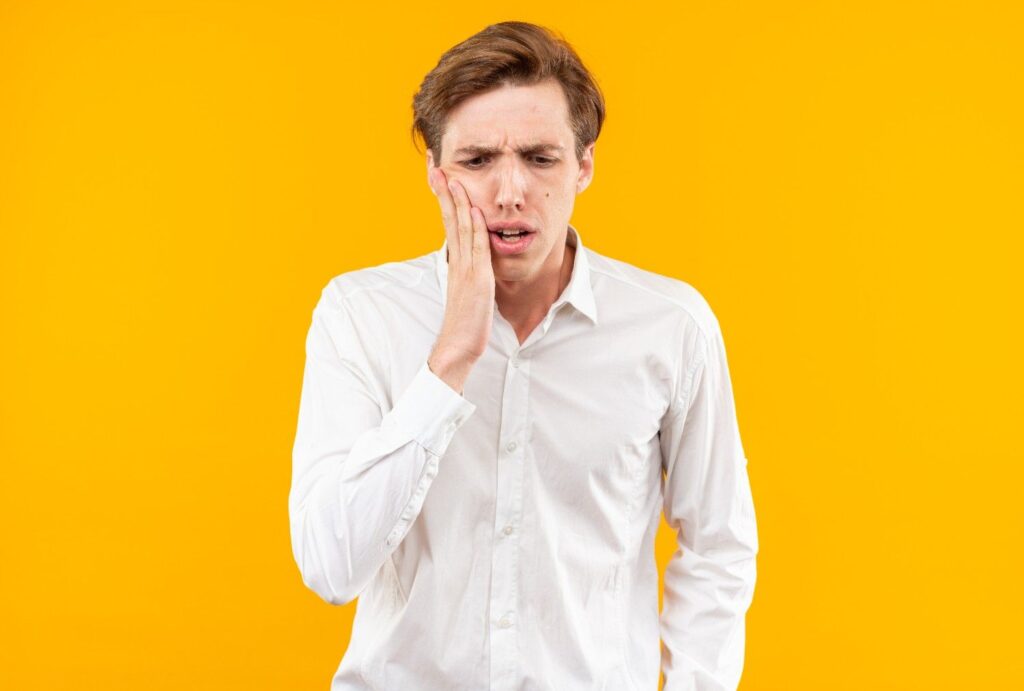
Different Types of Pain
| Type of Pain | Possible Cause |
|---|---|
| Sharp pain when biting | High crown or a crack |
| Dull pain | Nerve irritation |
| Throbbing pain | Infection |
| Pain that comes and goes | Early decay or bite problem |
| Pain with hot food | Exposed tooth or nerve issues |
Pain After Crown with Root Canal
Even if you had a root canal, crowned teeth can still hurt. Reasons include infection, poor crown fit, or your bite being off.
When Should You Worry?
Time to call your dentist if you notice any of these:
– Every bite hurts
– You spot swelling or pus
– Pain doesn’t go away after two or three weeks
– The crown hurts months after it was put on
– The pain is severe and throbbing, you have a fever, or your face starts swelling
How to Ease Crown Tooth Pain at Home
If you have to wait to see your dentist, here’s what you can do in the meantime:
1. Salt water rinse—great for inflamed gums.
2. Cold compress—gets swelling down.
3. Painkillers—over-the-counter stuff can help.
4. Avoid hard foods—take the pressure off.
5. Clove oil—offers mild numbing.
These won’t fix everything, but they help you hang in there until you see your dentist.
Dental Treatments for Crown Pain
Depending on what’s wrong, your dentist might:
– Lower the crown height
– Replace the crown
– Treat decay underneath
– Perform a root canal
– Prescribe antibiotics
Can You Get an Abscess Under a Crown?
Yep, it happens—and it’s serious. You’ll feel intense pain, notice swelling, see pus, and possibly get bad breath. Don’t mess around; get help fast.
How Long Does Crown Sensitivity Last?
Usually just one to three weeks, sometimes up to a month. If it drags on, something needs fixing.
Quick Answers to Common Questions
Q. Does a broken crown hurt?
Yeah, a broken crown hurts, especially if the tooth underneath is showing.
Q. Can a new crown cause jaw pain?
A new crown can make your jaw hurt if your bite feels off.
Q. Why does my crown hurt when I chew?
Your crown probably hurts when you chew because it’s either too high, cracked, or maybe there’s an infection.
Q. Is it too late for a crown if my tooth hurts?
If your tooth hurts before you get a crown, don’t panic—it’s not necessarily too late. Your dentist will figure out what’s best.
Final Thoughts
Crowns should protect, not cause pain. If you notice pain under a crown or pain that comes and goes, don’t ignore it. The sooner you get help, the easier (and cheaper) things usually are.