If you’ve been thinking about getting braces, you probably picture metal wires, lots of colors, and those regular tightening appointments. But honestly, things have moved on. These days, a lot of orthodontists recommend self-ligating braces. They’re newer, not as fiddly, need fewer checkups, and feel more comfortable.
So, what are self ligating braces?
Well, unlike regular braces, they don’t use those tiny elastic bands to hold the wire. Instead of rubber ties (called ligatures) holding the wire in place, they use a built-in clip or sliding door to keep everything secure.
Here’s a quick comparison:
Traditional braces are like tying your shoes with laces. Self-ligating braces are like zipping them up. Way easier and less fiddly.
What does “ligating” even mean?
Before getting into the details, let’s clear this up: “Ligating” is just tying or holding something in place. So:
Traditional braces use ligatures (rubber ties). Self-ligating braces don’t need any extra ties. That’s why you’ll hear them called “braces without bands,” “bandless braces,” or “self-ligating brackets.”
How do self-ligating braces actually work?
It’s pretty straightforward:
1. Brackets get fixed on your teeth—same as regular braces.
2. The wire slides through every bracket.
3. Each bracket has a little clip or door.
4. That clip keeps the wire in place.
5. The wire gradually moves your teeth where they need to go.
Why does this matter?
You get less friction between the wire and brackets, which means your teeth slide into position a bit more smoothly with less pressure.
Types of Self-Ligating Brackets
There are two main types:
1) Active
Active uses a spring clip to push more on the wire, giving precise control over tooth movement.
2) Passive
Passive brackets use a sliding door, so the wire can move freely without putting too much pressure on your teeth. That means they feel more comfortable and don’t rub as much.
Most newer braces use passive brackets since they’re gentler.
Metal vs Ceramic Self Ligating Braces
You’ll pick between two options:
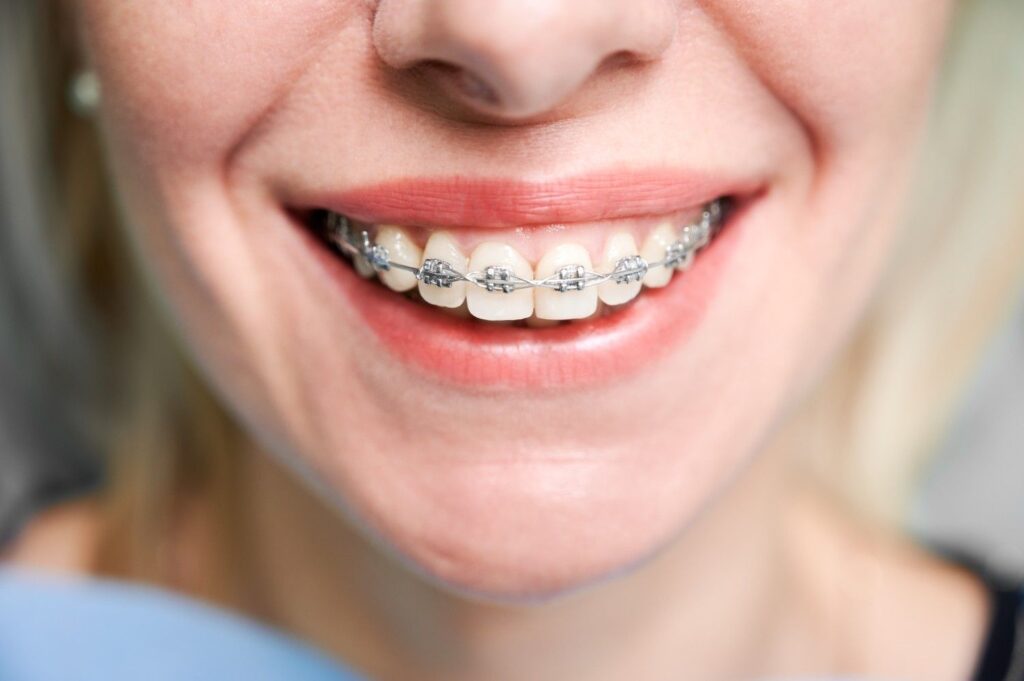
Metal: Strong, noticeable, and usually more affordable.
Ceramic: Less visible (matches your teeth), more stylish, but costs a bit more.
Why choose self-ligating braces?
Here’s why people go for them:
1. Fewer appointments—since there are no rubber bands to swap out, you’ll only visit the orthodontist every couple of months instead of every few weeks.
2. Comfort—less friction means your mouth isn’t as sore after adjustments.
3. Cleaning gets easier because there aren’t so many nooks for food or plaque to get stuck in.
4. Sometimes treatment’s faster, but honestly, it depends on your teeth and what needs fixing.
5. Cleaner look—even metal versions appear more streamlined, and ceramic ones are barely noticeable.
Can self-ligating braces fix serious dental issues?
Yep, they can help with things like:
– Open bite
– Crowded teeth
– Spacing
– Mild jaw alignment issues
But for really severe cases, you might still need other stuff, like aligners or surgery.
Self-Ligating Braces Cost—What’s the damage?
Here’s what you’re looking at:
Globally: $3,000–$7,500
In Pakistan: PKR 200,000–600,000+
What affects the price?
Where your clinic is, your orthodontist’s experience, how complicated your case is, and whether you pick metal or ceramic. Ceramic is pricier.
Are they worth it?
It depends on what you want. Go for self-ligating braces if you’re after less pain, fewer visits, and easier cleaning. Stick with traditional braces if you want the lowest price or you don’t mind frequent appointments.
Quick Comparison Table:
| Feature | Traditional Braces | Self-Ligating Braces |
|---|---|---|
| Bands | Yes | No |
| Comfort | Moderate | More comfortable |
| Visits | Frequent | Less frequent |
| Cleaning | Harder | Easier |
| Cost | Lower | Higher |
Common myths—let’s clear things up.
Myth 1: They move your teeth twice as fast. Not true. Speed really depends on your teeth.
Myth 2: No pain ever. There’s still some discomfort, just less than with regular braces.
Myth 3: They replace every orthodontic method. Nope—some cases need other solutions.
What about “self braces” or “single braces”?
You might see these phrases online, but they’re misleading. Real braces should always be done by a pro. DIY braces aren’t safe—they can mess up your teeth.
Allman style braces, Aurora brackets—what’s that?
Usually, they’re just brand names or marketing terms for self-ligating systems. The idea’s the same—no elastic ties holding the wire.
Do self-ligating braces slim your teeth?
Not directly. Braces align your teeth, but if reshaping is needed, your dentist will do a bit of smoothing separately.
Any downsides?
Honestly, a few:
– They cost more
– Treatment isn’t always faster
– Results depend on how skilled your orthodontist is
Final thoughts
Should you get self ligating braces?
Pick them if you want comfort, fewer checkups, and easy cleaning. If you’re on a tight budget or your case is really complex, think twice and explore your options.