When your dentist brings up dental X-rays, it’s pretty common to have questions. Are they actually necessary? Are they safe? And do you really need them every time you sit in the chair for a cleaning?
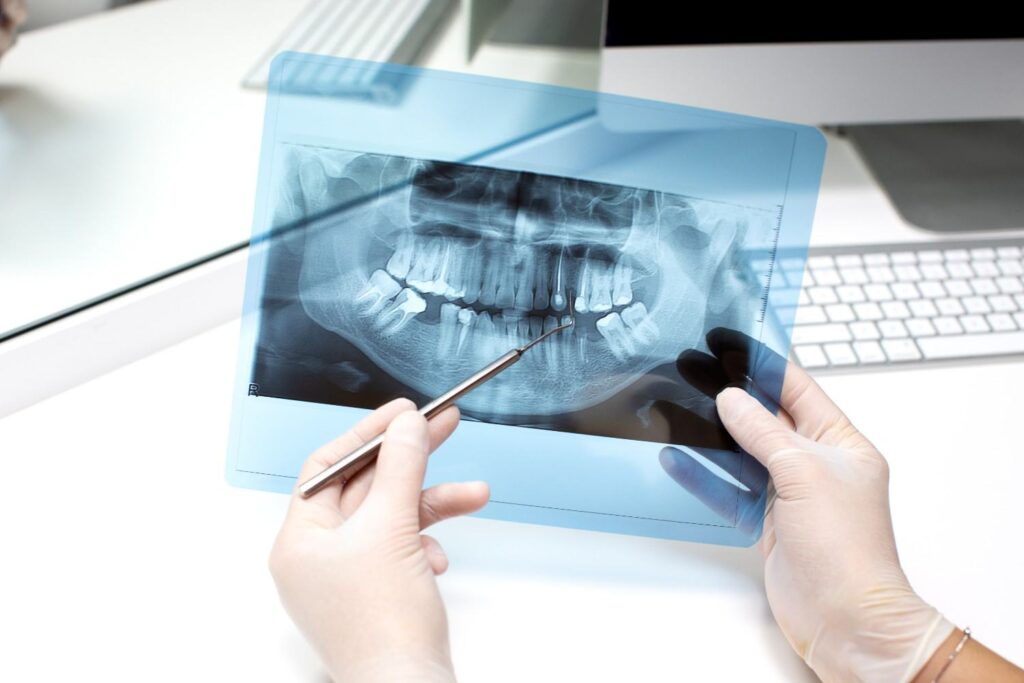
Here’s the deal: dental X-rays (or radiographs, if you want to sound fancy) let your dentist look inside and around your teeth, gums, and jaw in ways they just can’t by peering into your mouth with a mirror. They’re the tool for catching cavities, infections, bone loss, or even hidden teeth long before you feel any pain.
These days, most dentists use digital X-rays. The images pop up on a screen in seconds, and the radiation’s really low—nothing like old-school film X-rays.
What Are Dental X-Rays?
Dental X-rays create an image using a small burst of radiation so your dentist can check what’s happening below the surface. With them, your dentist can spot:
– Teeth and roots (even the ones you can’t see)
– What’s going on between teeth
– The health of your jawbone
– Impacted or growing teeth
– Bone changes or infections
– Old fillings, crowns, root canals, and other work
– The area right around your tooth roots
But don’t worry, X-rays don’t replace the dentist poking around and talking with you—they just add important info.
Why Do Dentists Use Dental X-Rays?
Mostly, dentists use X-rays to see the stuff hiding out of sight. They turn to them to:
– Find cavities between teeth
– Figure out what’s causing pain
– Check for infection or root trouble
– Look at bone levels or find stuck teeth
– See if teeth, gums, and bones are healing
– Plan out things like root canals or dental implants
– Track how children’s teeth are coming in
Take cavities—some develop between teeth, where even a careful visual examination may not detect them. A bitewing X-ray can help dentists identify these interproximal cavities.
How Do Dental X-Rays Work?
The process is fast and simple. Usually, here’s what happens:
1. The dentist checks your history and asks about symptoms. If you’ve had X-rays at another clinic not long ago, let them know—no need to double up.
2. They choose which X-rays make sense for you.
3. A tiny sensor goes inside your mouth (for intraoral X-rays). You bite down gently to keep it in place.
4. You sit still while the X-ray snaps. The zap of radiation is over in less than a second.
5. Sometimes they take a few images, sometimes just one—it depends on what you need.
6. Your dentist looks over the images right away, along with your exam.
The Main Types of Dental X-Rays
Not all X-rays are the same. You’ll probably hear terms like these:
– Bitewing: Shows the tops (crowns) of upper and lower teeth to spot cavities and bone loss.
– Periapical: Sees the whole tooth from crown to root tip—great for finding infections or root problems.
– Occlusal: Captures a big slice through your jaw—helpful for kids, or when something just looks “off.”
– Panoramic: A wide shot of all your teeth and both jaws—good for wisdom teeth and big-picture stuff.
– Cephalometric: Side-view of your head—mostly for braces and orthodontics.
– CBCT: This one’s high-tech, 3D pictures for tricky cases, surgery plans, or implants.
How Do These Machines Actually Work?
Simple idea: the X-ray machine shoots a narrow beam through your mouth. Hard stuff (like fillings, bone, or enamel) blocks more rays; soft stuff lets more through, so the sensor or picture comes out with light and dark spots you can read. Digital X-rays show the image instantly. No, your teeth don’t absorb radiation like a sponge—the only time you’re exposed is during that split-second picture.
Traditional vs. Digital X-Rays
Film X-rays used chemicals and took forever to develop. Digital X-rays use sensors, so:
– You see your images right away.
– The files are easy to zoom in, share, or store.
– No chemical smell or mess.
– Modern systems use lower doses of radiation.
Can Dental X-Rays Find Cavities or Gum Disease?
Yep, especially between teeth—cavities usually show up as a darker spot. But dentists don’t rely just on X-rays; what they see and what you tell them fills in the whole story.
For gum disease, X-rays show the bone holding your teeth in place. That’s one clue. But the dentist also checks your gums for bleeding, swelling, or pockets.
Do You Need an X-Ray Every Cleaning?
No way. Cleanings and X-rays aren’t automatically linked. Dentists order X-rays based on your risk for problems—things like a history of cavities, any pain or new problems, or big changes in your mouth. If everything looks good and your history’s clean, you can go years between X-rays.
Are Dental X-Rays Safe?
This question always comes up. Dental X-rays do use a tiny dose of radiation—much less than you’d get from a day in the sun or a flight across the country. Dentists are careful about taking only what you need, and digital X-rays keep the dose even lower.
Should You Worry?
For most healthy adults, the answer’s “no.” Dental X-rays don’t have side effects like dizziness or nausea. The worst part is sometimes you feel awkward biting the sensor if your mouth is small or sensitive.
Dentists only take X-rays when there’s a good reason. If you ever wonder what that is, just ask. They should always be able to explain why.
What About Pregnancy?
Tell your dentist if you’re pregnant. If an X-ray is truly needed, proper shielding makes the risk tiny. Sometimes, skipping dental care in pregnancy is a bigger problem. Your dentist will help you make the safest call.
What Don’t Dental X-Rays Show?
X-rays can’t catch everything. Tiny cavities, small cracks, or soft tissue problems sometimes hide. That’s why you still need the dentist’s eyes, hands, and ears too.
Getting Good X-Rays (for Dental Pros)
To get the best shot, your dentist aims carefully, positions the sensor, and double-checks before taking an image. That way, you don’t have to repeat exposures.
So, Can Dental X-Rays Catch Everything?
Nope—not even close. They’re just one tool. Dentists still poke around, measure gums, ask about pain, and listen to what you’re noticing at home.
FAQs
Q. Do I need dental X-rays every year?
Not by default—it’s based on your personal dental history and risk.
Q. Are they required for a cleaning?
No, they’re a separate decision.
Q. Can an X-ray show a cavity?
Yes, especially the sneaky ones you can’t see.
Q. Can an X-ray find an infection?
Spotting infections around roots or in the bone is one of their jobs, though not always a guarantee.
Q. Do digital dental X-rays use radiation?
Yes, but less than old systems.
Q. Are X-rays needed before a crown?
Sometimes, if the dentist wants to learn more about the tooth, root, or bone.
Q. Do X-rays move your teeth?
No, the sensor just rests against them.
Q. How many X-rays do I need?
Depends on your mouth and your dentist’s reason for the X-rays.
The Bottom Line
Dental X-rays help your dentist catch problems early—cavities, infections, or hidden trouble you’d never guess was there. The whole process is quick, and modern X-rays use very little radiation.
You don’t need them automatically every year or every visit. Your dentist weighs your needs and decides what makes sense.
Still have questions? Just ask. Your dentist should always be up front about why they’re ordering an X-ray and how it fits into your care. When you know the reason, dental X-rays don’t seem nearly as mysterious.