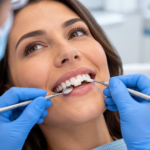
Just got braces and noticed some weird little bumps on your teeth? Maybe they’re blue, pink, or blend right in with your tooth color. They’ll probably feel odd—especially when you eat or close your mouth for the first time. These are called bite blocks, and they’re actually a normal part of some orthodontic treatments.
Bite blocks work to prevent your top and bottom teeth from smashing into certain brackets, and they help fix bite issues like a deep bite. Sometimes they create space for your teeth so they can move where they need to go.
Even though bite blocks are tiny, they can shake up your daily routine. Eating gets tricky, your teeth won’t connect like they used to, and chewing can feel all wrong for a while.
What Are Bite Block Braces?
Bite blocks are small attachments your orthodontist sticks on specific teeth while you’re in braces. Their job? Keep your upper and lower teeth from crashing into each other every time you bite down.
They’re usually made from a dental bonding material—think composite resin. They look like tiny bumps glued to the chewing surfaces of your molars or sometimes the back side of your front teeth.
Depending on your treatment, they might be blue, pink, or tooth-colored. You’ll also hear names like:
– Bite bumps
– Bite pads
– Bite turbos
– Bite ramps
The names get tossed around a lot and basically come down to shape and placement.
Ordinary braces brackets hold the orthodontic wires in place, while bite blocks change how your upper and lower teeth meet.
What Do Bite Blocks Do?
You might wonder why your orthodontist is putting even more stuff in your mouth when you’ve already got braces. Here’s the deal: sometimes your teeth hit your braces when you bite down. That can damage brackets and mess up your treatment.
Here’s what bite blocks help with:
1. Protecting Brackets
When your upper front teeth overlap your lower teeth too much, they’ll smack right into the brackets on your lower teeth. Do that enough and you’re loosening and breaking brackets. Bite blocks keep your teeth apart and save your brackets from this kind of abuse.
2. Fixing a Deep Bite
If your upper front teeth cover too much of your lower ones, bite blocks can be used to “open up” your bite, keeping your teeth apart while braces slowly shift things into place.
3. Making Space for Tooth Movement
Sometimes a tooth can’t move because another tooth is in the way. Bite blocks change things up just enough so your orthodontist can make the needed adjustments.
4. Cutting Down Bracket Breakage
Broken brackets mean slower treatment and extra visits. Bite blocks shift the contact points, giving your gear some extra protection. They aren’t foolproof, but they help.
Types of Bite Blocks
All bite blocks aren’t identical. Their placement and design depend on your bite and treatment plan. Different types of braces use different bracket systems to move teeth gradually. Learn more about how self-ligating braces work
1) Posterior Bite Blocks
These go on the top of your back teeth—the molars. They’re just little raised bumps (sometimes blue, pink, or tooth-colored) and help prevent your upper teeth from banging into the lower brackets. This is what people usually mean by “bite bumps.”
2) Anterior Bite Turbos
Turbos are typically attached behind your upper front teeth. When you bite down, your lower fronts touch the turbos—not the braces. These are common when you need to fix a deep bite.
3) Bite Pads
Another term for attachments that change where your teeth meet. Their look depends on the orthodontist’s plan.
4) Removable Bite Plates
Different than bonded blocks, these are acrylic appliances you can take out for cleaning or eating (if your orthodontist says that’s okay). Some have raised sections for specific bite problems.
Bite Blocks vs. Bite Turbos
You’ll probably hear “bite blocks” and “bite turbos” used as if they’re the same. Both create space between your top and bottom teeth, but the names can refer to different designs or placements.
1. Main Purpose
-
Bite Blocks: Change how the upper and lower teeth meet and help protect braces brackets.
-
Bite Turbos: Help open the bite and prevent teeth from hitting braces brackets.
2. Placement
-
Bite Blocks: Can be placed on the front or back teeth.
-
Bite Turbos: Usually placed behind the upper front teeth.
3. Appearance
-
Bite Blocks: Usually look like small raised bumps.
-
Bite Turbos: Usually look like small ramps or raised pads.
4. Material
-
Bite Blocks: Usually made from composite resin.
-
Bite Turbos: Commonly made from composite resin or metal.
But really, it’s all about what your orthodontist decides is right for you.
Why Only Your Bite Blocks Touch
This catches a lot of people off guard. Suddenly, your back teeth aren’t touching and just your bite blocks make contact when you bite down. That’s actually by design. Bite blocks keep certain teeth apart, and you’ll usually only have one or two contact points. Give your mouth a little time—it will adjust. If you’re feeling serious pain or jaw discomfort, or can’t close comfortably, let your orthodontist know. Don’t force your teeth to touch just to recreate your old bite.
How Long Do You Need Bite Blocks?
It all depends on your treatment. Some people only have them for a few months, others keep them longer—often anywhere from 4 to 12 months, sometimes more. Your orthodontist removes them when:
– Your teeth stop hitting brackets
– Your deep bite improves
– You hit the right treatment milestone
– Extra separation isn’t needed
Your orthodontist will check them during your regular visits. Bite blocks don’t make braces work faster, but they do help avoid delays caused by broken hardware. Once your orthodontic treatment is complete, your braces will eventually be removed. Learn more about the braces removal process and what to expect during your final appointment.
Do Bite Blocks Wear Down?
Yep, they do! With all the grinding and chewing you do, bite blocks gradually flatten out or get smaller. You might notice rough edges or they don’t seem as tall anymore.
If they wear down too much, your upper teeth might start hitting braces brackets again. Things that can speed this up:
– Chewing habits (lots of pressure)
– Teeth grinding/clenching
– Crunchy or hard foods
– Bite block material type
– Where your blocks sit (some take more stress than others)
Your orthodontist will check and replace or adjust them if needed.
What If a Bite Block Falls Off?
It’s worrying, but it’s not a crisis. Still, you should tell your orthodontist, since you might need that block to protect your brackets.
– Check your mouth and see if one or both came off.
– If you find the piece, save it—don’t try to glue it back.
– Stick to softer foods until your orthodontist gives advice.
– Let your orthodontist know what happened and see if you need to come in sooner.
– If your upper teeth start banging into lower brackets, let them know quickly.
Never try to fix or replace a bite block yourself.
Eating With Bite Blocks
At first, eating just feels weird. Your teeth don’t connect like they used to and chewing is awkward. But most people get used to it. Here are some tips:
1) Start With Soft Foods
Stick to stuff that’s easy to chew, like scrambled eggs, mashed potatoes, yogurt, oatmeal, soft rice, bananas, smoothies, soft pasta, soup, and well-cooked veggies.
2) Cut Food Small
Avoid biting straight into big food items. Slice apples, sandwiches, veggies, you name it—smaller pieces make things easier.
3) Chew Slowly
Take your time and chew gently. Your mouth has to adjust to new contact points—don’t force your teeth together.
4) Avoid Hard or Sticky Foods
You’ll want to skip nuts, candy, popcorn kernels, caramel, toffee, crusty bread, hard veggies, and gum. These can damage bite blocks—and your braces.
5) Return to Normal Foods Slowly
As you get comfortable, introduce regular foods. But follow your orthodontist’s advice on what’s safe for your braces.
Do Bite Blocks Hurt?
They don’t usually cause intense pain, but mild discomfort is pretty common:
– Pressure while chewing (concentrated around the blocks)
– Tooth sensitivity (the ones holding the blocks can feel tender)
– Jaw fatigue (muscles need time to adjust to new angles)
– Irritation to your tongue or cheeks
These usually fade as you adjust. If pain is worse, persistent, or meets your tongue or cheek in a way that feels wrong, check with your orthodontist.
Keeping Bite Blocks and Braces Clean
Taking care of your mouth really matters—especially when you’ve got bite blocks. Plaque and bits of food tend to hide around them, which can lead to cavities and gum problems if you’re not careful.
– Brush twice daily with a fluoride toothpaste.
– Use a soft-bristled brush.
– Take extra care around brackets and bite blocks.
– Use an interdental brush for hard-to-reach spots.
– Floss every day (try an orthodontic floss threader).
– Water flossers help too.
– Use fluoride products per your orthodontist’s advice.
Don’t neglect the area around bite blocks.
Can Braces Fix Your Bite?
Absolutely. Braces use gentle pressure to move teeth into better positions. Sometimes your orthodontist will use bite blocks, elastics, or other gadgets along the way.
Some bite problems braces can help with:
– Overbite (upper front teeth overlap lower)
– Overjet (upper fronts stick out)
– Underbite (lower fronts are in front)
– Crossbite (certain teeth are out of alignment)
– Open bite (some teeth don’t touch)
– Deep bite (upper fronts cover too much of lower ones)
Sometimes braces are enough, other times you’ll need extra appliances. Bite blocks support the process—they’re not a solo fix.
When Should You Call Your Orthodontist?
Not every bite change means a trip to the office, but if you notice:
– A block falls off
– An attachment is loose
– Teeth start hitting brackets
– Bite blocks are worn down a lot
– Persistent or severe pain
– Your bite feels significantly different
– You can’t chew comfortably
– A broken block is irritating your tongue/cheek
Let them know. And if a loose block causes trouble swallowing or breathing, get medical help fast.
Bite Blocks FAQ
Q. Are bite blocks permanent?
Not at all. They’re just temporary, and your orthodontist takes them out once you don’t need them anymore.
Q. Can I take out bite blocks myself?
Nope, don’t do it. Trying to pry them off yourself risks messing up your teeth or braces.
Q. Do bite blocks change the way I talk?
A little, at first. Some people get a bit of a lisp or have trouble saying certain words, especially if the blocks are behind their front teeth. Usually it clears up as you get used to them.
Q. Are blue bite blocks different from white ones?
No difference really—it’s just about the materials your orthodontist prefers.
Q. Can I chew gum with bite blocks?
Skip the gum. It can get stuck on your braces or around the blocks.
Q. Why do my bite blocks feel lopsided?
Sometimes one block might hit before the other, which can feel weird. If it’s uncomfortable or painful, have your orthodontist take a look.
Q. What happens when bite blocks come off?
Your orthodontist will clean off the adhesive and make sure your bite is okay. It’s normal for your teeth to feel different while you get used to it.
Q. Can braces fix a deep bite without bite blocks?
Sometimes they can, depending on how deep your bite is and what your treatment plan looks like. Your orthodontist will help you figure out the right approach.
Final Thoughts
Bite blocks might seem like tiny tweaks to your braces, but they’re pretty important. They help prevent tooth contacts that can mess up your brackets, and give your orthodontist more control over your bite correction.
The first few days, eating feels weird and your teeth don’t meet normally, but most people adjust. Stick to soft foods early on, avoid hard or sticky snacks, keep your teeth clean, and reach out to your orthodontist if something falls off or gets damaged.
Take care and let your orthodontist handle the details. Bite blocks are just one step toward that straight, healthy smile you’re working for.
Medical Sources
-
- Colgate – What Is a Bite Block?
- American Association of Orthodontists – Do Braces Hurt? Managing Orthodontic Discomfort
- NHS – Braces: Treatment and Care
- American Dental Association – Orthodontics