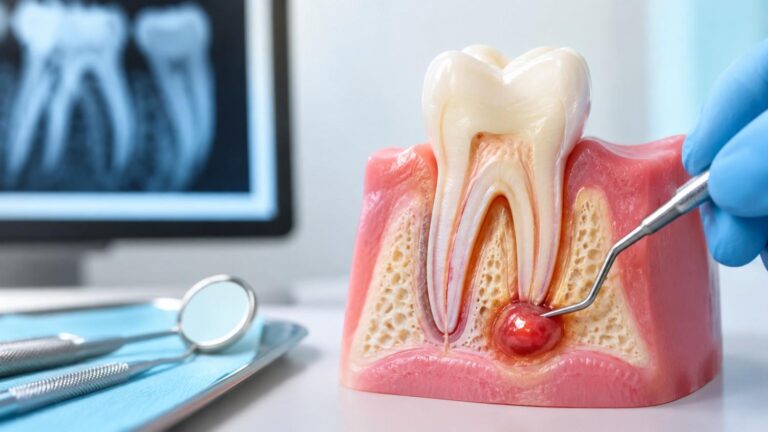
Throbbing tooth pain isn’t just annoying—it can take over your whole day. Eating? Miserable. Sleeping? Forget it. Sometimes the pain sticks to one tooth, but it can also spread to your gums, jaw, or even your other teeth. It might just ache dully in the background, shoot sharp pain when you chew, or throb in time with your heartbeat.
There are lots of reasons teeth start throbbing: cavities, a sensitive or inflamed nerve, a crack you didn’t see coming, gum disease, or even an infection. But not every toothache equals an infection. Grinding your teeth, sinus issues, and a bad bite can set things off too.
Knowing what’s causing your pain helps you figure out your next move. This guide breaks down what usually causes throbbing toothaches, why teeth hurt sometimes even without a cavity, what you can try at home, and when you really need a dentist.
What Exactly Is Throbbing Tooth Pain?
Throbbing tooth pain feels like a pulse—like your heartbeat has moved into your tooth or your gums. Maybe it starts off as a mild annoyance, but it can crank up to relentless, full-on pain.
Usually, that pulsing ache shows up when the tissues inside or around a tooth get inflamed or irritated. A deep cavity, for instance, can reach the pulp (that’s where the tooth’s nerves and blood vessels live). Swelling in the gums or around the tooth root does it too.
You might notice:
– A dull ache that sticks around all day
– Sharp pain biting down or chewing
– Sensitivity to heat, cold, or sweets
– Swollen or tender gums
– Pain spreading into your jaw or nearby teeth
– Toothache that hits harder at night
– Pain that flares up, vanishes, then returns for no obvious reason
The kind of pain can give you clues, but it’s tough to know exactly what’s wrong without a dentist taking a look (they’ll probably want X-rays too).
What Causes Throbbing Tooth Pain?
A bunch of different problems can cause it. Treating the ache depends on what started it in the first place.
1. Tooth Decay and Cavities
Cavities are the classic culprit. They start quietly as acids from bacteria wear down enamel, but as decay moves deeper, you get sensitive teeth or that classic throbbing pain—especially when eating or drinking. If decay reaches the nerve, it can get intense and persistent.
You might notice a hole or a dark spot on your tooth, or maybe food keeps getting stuck in the same spot every time you eat. Cavities don’t always show up where you can see them—they sometimes hide between teeth or underneath old fillings. How your dentist decides to fix everything—a simple filling, a crown, or even a root canal—really depends on how deep the problem goes.
2. Dental Abscess or Tooth Infection
If bacteria reach the tooth’s root or the gum nearby, they can cause a pus-filled pocket—an abscess. These hurt. The pain might spread to your jaw or cheek, and you could also notice swelling, fever, a bad taste in your mouth, or pain when biting.
An abscess needs quick treatment: usually draining, maybe a root canal, or even removing the tooth if things are bad. Sometimes you’ll need antibiotics, but they’re never a stand-in for the actual dental work.
Serious swelling, or trouble breathing or swallowing along with the swelling? Get emergency help, fast.
3. Inflamed Tooth Nerve
The nerve and soft tissue inside a tooth—the pulp—can get inflamed from deep decay, cracks, or repeated dental work. This “pulpitis” shows up as sensitivity to hot or cold that just lingers, toothaches that come out of nowhere, or pain that wakes you up at night. In severe cases, a root canal might be needed to save the tooth.
4. Cracked or Broken Tooth
Cracks can cause stabbing tooth pain, especially when you bite. Small cracks often hide, but they still hurt. Injury, chewing hard stuff, or grinding can crack a tooth. If a crack gets to the nerve, you might end up with inflammation or even an infection. Try not to chew on that side and see your dentist soon—fixes are usually easier if you act fast.
5. Gum Inflammation or Gum Infection
Throbbing pain sometimes comes from irritated or infected gums. Redness, swelling, bleeding when brushing, and tenderness are red flags. Food stuck under the gum can be surprisingly painful. Untreated, gum disease can damage the bone and support around your teeth. Sometimes you’ll just need a good cleaning, but it’s best to get checked.
6. Teeth Grinding and Clenching
Grinding or clenching puts too much force on your teeth and jaw. The pain might feel dull and spread out—or you’ll wake up with sore gums, stiff jaw muscles, or headaches. Your dentist can spot the signs and suggest a mouth guard for night-time use.
7. Bite Problems or High Fillings
If your bite is off and one tooth hits before the others, it starts to take more force than it should. A new filling or crown that’s just a smidge too high can also cause soreness. If this is the cause, your dentist can adjust things relatively quickly.
Why Does My Tooth Hurt When There’s No Cavity?
Tooth pain isn’t always about cavities. Sometimes, the cause is sneakier:
– A cavity might be hiding between teeth or under a filling.
– Cracks that are hard to spot can hurt.
– Exposed roots from gum recession are super sensitive.
– Grinding puts pressure on multiple teeth.
– Sinus congestion can make your upper teeth ache.
– Bite issues irritate the surrounding tissues.
– Even if the outside looks normal, the nerve inside could be inflamed.
So if you’re hurting, don’t just assume everything’s fine. Get checked out.
Why Does Tooth Pain Move Around?
Ever feel like your toothache is playing musical chairs? That’s called referred pain—nerve signals in your mouth sometimes confuse your brain, so it’s hard to nail down the exact tooth. Grinding, sinus issues, gum disease, or having more than one dental problem can also make pain move around.
Tell your dentist exactly where it started, where it goes, and what makes it worse—they’ll know what to do with that info.
Front Teeth vs. Back Teeth Pain
The spot where your pain is centered gives more clues.
Front teeth hurt most often from decay, gum recession, cracks, or trauma. Even if the tooth looks fine on the outside, the nerve can still be hurting from an old bump or accident. If a front tooth turns gray, feels loose, or aches after a knock, don’t put off a dental visit.
Back teeth, on the other hand, take most of the chewing load. Cavities, cracks, broken fillings, and grinding usually hit here. Wisdom teeth hiding under the gums can also cause throbbing pain. If a molar keeps acting up, get it checked.
Why Do My Teeth Hurt When I Chew or Move My Head?
Pain often flares when you actually use your teeth:
– Chewing pain: Could be a crack, deep cavity, root inflammation, or a high filling.
– Pain when you move your head: This usually means sinus pressure, but it can also make a hidden tooth problem more obvious.
– Food stuck/pain after eating: Trapped food can irritate gums or expose painful spots in a tooth or filling.
– Pain swallowing: Might signal a dental problem or something else, but if swallowing hurts and you have swelling—seek emergency care fast.
Can the Pain Come and Go?
Yes. Don’t let a disappearing toothache fool you into thinking everything’s healed. Cracked teeth hurt when bitten a certain way. Some problems only sting when it’s hot or cold. Tooth nerve issues often cause pain that’s on-and-off. And sometimes, when the pain stops suddenly after being really bad, it means the nerve inside the tooth has died, but the infection or inflammation is still simmering below.
Home Remedies: Finding Relief Before the Dentist
You can try a few things to feel better, but remember, these don’t fix the real problem:
- Warm salt water rinse. Mix half a teaspoon of salt in warm water, swish gently, spit. It helps clean out debris and soothes gums.
- Try a cold compress. Just wrap some ice in a towel and hold it against your cheek to help calm swelling or pain from a knock or injury.
- Floss, but gently. If you think something’s stuck, grab some floss and work it out. Don’t use anything sharp, or you’ll just make things worse for your gums.
- Stick with soft foods. Chew on the side that doesn’t hurt, and skip whatever sets off your tooth pain.
- Painkillers like ibuprofen or acetaminophen can help for a while. But don’t ever put aspirin right on your tooth or gums—it can actually burn the tissue.
These ease symptoms for a while, but they don’t actually heal the tooth.
When Should You See a Dentist?
Don’t ignore:
– Serious or ongoing throbbing pain
– Swelling in your gum, cheek, or face
– Fever or bad taste in your mouth with dental pain
– Toothaches that keep you from sleeping or eating
– Broken teeth or dental injuries
– Pain that returns after a recent dental procedure
Swelling with trouble breathing, swallowing, or rapid swelling? Go to the emergency room.
How Dentists Treat Throbbing Tooth Pain
Treatment depends on what’s causing the pain:
– Fillings for cavities that haven’t hit the nerve.
– Root canal if the nerve is too inflamed or infected.
– If your gums are the problem, you might need some cleaning or treatment for gum disease.
– Sometimes a filling or crown sits too high and messes with your bite. A dentist can fix that.
– If you grind your teeth, you might need a custom night guard to protect them while you sleep.
– Tooth extraction if the tooth can’t be saved.
Some tenderness right after treatment is normal, but if it gets worse or stays bad, check back with your dentist.
Preventing Throbbing Tooth Pain
You know the drill: good oral hygiene goes a long way.
– Brush with fluoride toothpaste twice a day
– Floss or use interdental brushes daily
– Cut down on sugary snacks and drinks
– Keep regular dental checkups
– Don’t chew ice or other hard stuff
– Wear a mouthguard if you play contact sports
– If you wake up with sore teeth or jaw, ask your dentist about grinding
A healthy routine helps, but not every problem is preventable—injuries, hidden cracks, and infections can sneak up on anyone.
FAQ
Q. Why does my tooth throb, but not hurt when I touch it?
Sometimes the pain comes from inside the tooth (like an inflamed nerve), so touching the outside doesn’t trigger it. You still need it checked.
Q. Can a tooth throb without being infected?
Absolutely. Cracks, nerve irritation, grinding, or chewing pressure can all cause throbbing without an infection.
Q. Why do all my teeth hurt at once?
Usually grinding, clenching, gum problems, or sinus pressure. But it’s worth having your dentist take a look.
Q. Why does my tooth hurt when I wake up?
Night grinding or clenching is a classic reason. You could also have an underlying tooth problem brewing.
Q. Do I always need a root canal for throbbing pain?
Nope. Sometimes you just need a filling, cleaning, or a bite adjustment. Root canal is for nerves that can’t heal.
Q. Can home remedies cure a dental infection?
No, you’ll need real dental treatment to stop an infection.
Final Thoughts
There are a lot of reasons your tooth might be throbbing—decay, injury, gum issues, grinding, or something else entirely. Home remedies can keep you comfortable for a little while, but don’t use them to put off treatment. If the pain sticks around, spreads, or keeps coming back, it’s time to let a professional figure out what’s going on and get you out of pain for good.