That sore or swollen bump on your gum? Hard to ignore, isn’t it? Maybe it hurts when you chew, feels tender when you touch it, or looks like a tiny white or yellow pimple. Sometimes, you might even notice pus or taste something unpleasant.
One likely culprit: a gum abscess.
A gum abscess happens when an infection causes pus to pool in or around your gum. It can show up because of gum disease, trapped food, an infected or decayed tooth, an injury, or bacteria slipping into a gum pocket.
Now, sometimes these are really painful. Other times, you hardly feel a thing. Pain isn’t always a reliable signal—so don’t rely on that alone to know if something’s wrong.
What is a Gum Abscess?
It’s a local infection that collects pus inside or around your gum. Bacteria find a way in, your immune system fights back, and suddenly, you’ve got inflammation, swelling, and pus.
Sometimes the infection starts in the gum itself. Other times, it comes from a tooth infection draining through the gum. You might hear it called a gum boil, gum infection, gum pimple, pus pocket, gingival abscess, or periodontal abscess. These labels aren’t always exact, so your dentist will need to check out what’s really going on.
Types of Gum and Dental Abscesses
Knowing the type makes a difference for treatment.
1) Gingival Abscess
This develops right in the gum—often when something (like a bit of food or a foreign object) gets trapped under the gum or when the gum is injured.
2) Periodontal Abscess
This one is deeper. It forms in the tissue supporting the tooth, usually tied to gum disease. Bacteria, plaque, tartar, and food get trapped in deepened gum pockets, blocking drainage and creating pus.
3) Tooth or Periapical Abscess
Here, the trouble begins inside the tooth. Deep decay, cracks, injury, or infection reach the pulp (the tooth’s nerve). Infection then spreads, sometimes causing a gum boil.
Is a dental abscess the same thing as a gum abscess?
Not really. Dental abscess just means an infection has sprung up around a tooth or nearby tissue. But different abscesses start in different places, so it matters.
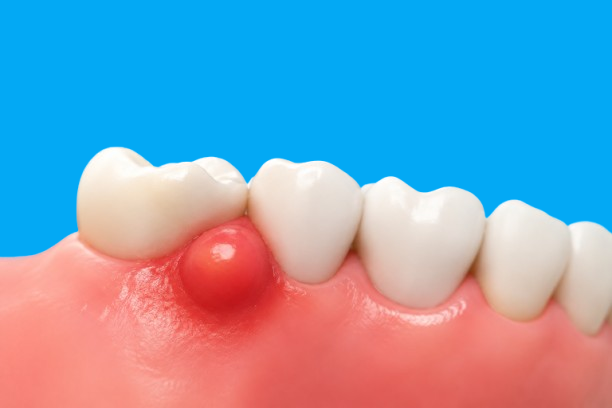
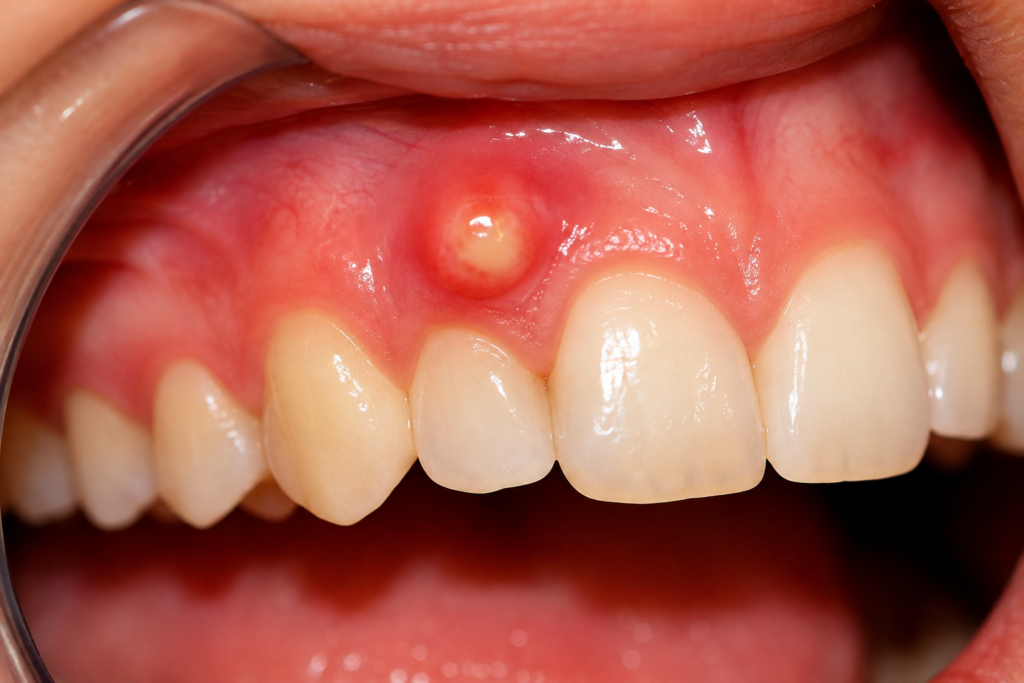
What Does a Gum Abscess Look Like?
People often try to self-diagnose by looking for images of gum abscesses or boils. What might you see?
– Swollen bump on the gum
– Red area near a tooth
– White or yellow pimple-looking spot
– Small blister filled with fluid
– Gum that’s shiny or stretched
– Lump above or below a tooth
– A pus pocket
– Tiny hole leaking fluid
Not all abscesses are obvious. Some are easy to miss or just cause mild swelling, and sometimes a serious tooth infection doesn’t cause a large bump at all.
Bottom line: don’t count on pictures to tell you what’s going on. Other things can cause bumps on your gums, too.
What Does a Gum Abscess Feel Like?
Tender, sore, throbbing, swollen—sometimes firm, sometimes squishy. Chewing might be uncomfortable. You might feel pressure or notice a nasty taste if the abscess starts draining.
Is it hard or soft? Both are possible. If inflammation is deeper, the area might feel firmer. If the pus is closer to the surface, it’s softer. But a hard lump isn’t always an abscess—cysts, bone spurs, or other oral issues can cause bumps too. If a lump doesn’t go away or keeps returning, see your dentist.
Can You Have a Gum Abscess Without Pain?
Yes. Sometimes, the infection finds a little escape tunnel (called a fistula), which lets the pus drain and reduces pressure, so there’s not much discomfort—or none at all.
You might see a painless pimple: it pops up, gets bigger, drains, shrinks, and returns later. But the problem hasn’t gone away. A recurring painless bump? Get it checked out.
Common Gum Abscess Symptoms
You might notice:
- Swollen, red gums
- A lump or bump
- Pus oozing from the gum
- Gum or tooth pain
- Pain when you bite down
- Tooth sensitivity
- Bad breath
- Salty or bad taste
- Gum bleeding
- A loose tooth
- Swelling in your face or jaw
- Fever or just feeling sick (if it’s a serious infection)
You don’t need all these symptoms. Some people only spot a small bump. Others get hit with severe pain or a rush of pus.
How Can You Tell If You Have a Gum Abscess?
You can’t always tell just by looking. Dentists check the swelling, look for pus, probe gum pockets, check tooth mobility and sensitivity, tap the tooth to see if it hurts, and look for cracks or decay. They may also take X-rays to see if the infection is in the gum, tooth, or both.
If you have a painful or recurring bump, pus, swelling, or a bad taste in one part of your mouth, set up a dental appointment.
What Causes a Gum Abscess?
Most of the time, bacteria are to blame. But let’s get specific:
1) Gum Disease
Gum disease creates pockets where bacteria, plaque, tartar, and food get stuck. If bacteria go wild and can’t drain, you get an abscess. Bleeding gums can also be an early warning sign that your gums need attention.
2) Tooth Decay
A cavity that goes deep can let bacteria into the tooth and down to the root, which then affects the surrounding tissue and sometimes forms a gum boil.
3) Cracked or Damaged Tooth
Cracks let bacteria in—even tiny ones you can’t see. So you need a dentist’s help, especially if everything else looks fine.
4) Food Trapped Under Gum
Little bits of food wedged under your gums can irritate the tissue and trigger infections.
5) Gum Injury
Cuts or other damage open a door for bacteria.
Why Does My Gum Abscess Keep Returning?
If you keep getting the same bump, it means something deeper hasn’t healed.
Could be:
- An untreated tooth infection
- Persistent gum disease
- Deep periodontal pocket
- Cracked tooth
- Lingering root infection
- Food trapping issues
- Problems near old dental work
Basically, you can’t just treat the visible bump, you have to target the cause.
Gum Abscess vs. Gum Boil
A gum boil looks like a little pimple—red, white, pink, yellow; maybe it hurts, maybe not. “Gum boil” and “gum abscess” are often used interchangeably, but a gum boil is often just a release point for an infection deeper around a tooth.
Getting rid of the visible bump doesn’t clear out the deeper infection.
Gum Abscess vs. Gum Cyst
Abscesses are usually infected and full of pus. Cysts are more like fluid-filled sacs. Both can look like bumps and sometimes aren’t painful. Since they can be hard to tell apart, don’t rely on online images. Dentists may need an X-ray to sort things out.
What Happens If a Gum Abscess Pops?
Sometimes, the abscess bursts on its own. You might see pus, notice a bad taste, and feel less pain or pressure—like the problem vanished.
But really, draining the pus doesn’t clear the underlying infection. Don’t squeeze or poke at it—rinse gently, then go see your dentist.
Should You Pop or Drain a Gum Abscess at Home?
Absolutely not. Don’t cut, squeeze, poke, or try to drain it yourself.
You risk:
– Hurting your gums
– Causing bleeding
– Bringing in more bacteria
– Missing the real cause
– Delaying real treatment
Dentists treat not just the pus, but the real issue behind it.
Will It Heal on Its Own?
Don’t count on it. The abscess might drain and shrink, and pain could fade for now. But that doesn’t mean the infection is gone. Especially if the bump keeps returning, you need treatment.
How Is a Gum Abscess Treated?
Treatment depends on the cause:
– Drainage: The dentist removes pus to relieve pressure.
– Cleaning: For a gum (periodontal) abscess, the dentist may perform deep cleaning to remove plaque and tartar from the affected pocket and treat the gum disease if needed.
– Root Canal: If the infection started inside a tooth and the tooth can be saved, root canal treatment cleans out the infection and seals the tooth.
– Extraction: If the tooth is unsalvageable, it gets removed.
– Antibiotics: Used if the infection is spreading or for specific reasons—but antibiotics alone don’t solve the actual dental problem.
How to Manage a Gum Abscess at Home
Home care might ease discomfort till you get to the dentist, but it’s not a cure.
Here’s what helps:
- Brush gently with a soft brush
- Keep the area clean
- Rinse with warm salt water
- Eat soft foods if chewing hurts
- Chew on the unaffected side
- Use over-the-counter pain relief appropriately (if safe for you)
Don’t:
- Pop or cut the abscess
- Stick needles in your gum
- Squeeze out pus
- Apply harsh chemicals or aspirin to the gum
- Use leftover antibiotics
Does Salt Water Cure a Gum Abscess?
No, it doesn’t. Salt water rinses might calm things down and keep things clean, but they won’t cure an infection. Think of it as a supportive step while you get professional help.
Is a Gum Abscess Dangerous?
It can get serious if the infection spreads. Get emergency attention if you notice:
– Rapidly spreading swelling (especially to your face or near your eye/neck)
– Fever with swelling
– Struggling to open your mouth
– Trouble swallowing
– Trouble breathing
– Rapid worsening, or just feeling really sick
Breathing or swallowing problems with facial swelling? Treat it as an emergency.
Gum Abscess in Children
Kids get these too, and you shouldn’t try to drain a child’s gum abscess at home.
Watch for:
– Red or white gum bump
– Tooth pain
– Swelling in the face
– Trouble eating or chewing
– Bad breath
– Fever
– Crankiness
– Refusing to chew on one side
– Trouble sleeping
A dentist will figure out whether it’s a baby tooth, adult tooth, injury, decay, or gum issue.
How to Prevent Gum Abscesses
Take care of your mouth and you lower your risk:
- Brush twice daily with fluoride toothpaste
- Clean between your teeth
- Don’t ignore bleeding/swollen gums
- Treat cavities early
- Address cracked or damaged teeth fast
- Get regular dental checkups
- Stick to your gum disease treatment plan
Catching problems early always beats fighting a major infection later.
Frequently Asked Questions
Q: What does a gum abscess look like?
A: Usually a swollen, red, pink, white, or yellow bump near a tooth—a pimple or blister.
Q: What does a gum boil look like?
A: Raised bump, sometimes with white or yellow in the center. Might release pus or taste bad.
Q: Can a gum abscess be hard?
A: Yes. Inflammation stiffens the area, but pus-filled bumps can feel soft too. See a dentist if any lump sticks around.
Q: Can you have a gum abscess with no pain?
A: Definitely. If it drains through the gum, there might be little or no pain.
Q: Do gum boils go away by themselves?
A: They might shrink after draining, but the infection isn’t gone, so it often comes back.
Q: Can I pop a gum abscess?
A: Don’t. It’s risky and doesn’t solve the deeper problem.
Q: How do you get rid of a gum abscess?
A: See a dentist—they’ll drain it, clean it out, treat the cause, and sometimes use antibiotics.
Q: Why is pus coming from my gums?
A: Likely a gum or tooth infection draining through the gum.
Q: Is a gum boil the same as an abscess?
A: They’re related—“gum boil” is often the drainage point for a deeper abscess.
Q: How long until a gum abscess heals?
A: Depends on the cause and treatment. If things get worse after seeing the dentist, call them.
Final Thoughts
A gum abscess is basically a pocket of infection in your mouth—it shows up as a painful, swollen area, a blister, a gum boil, or sometimes just a painless bump. The main causes: gum disease, deep pockets in your gums, tooth decay, cracks, trapped food, or infection starting in a tooth.
The big thing to remember: just because the bump drains or the pain fades, that doesn’t mean you’re out of the woods. The infection can still be there. Don’t try popping it yourself—a dentist needs to figure out where it started and get you on the right treatment.
And if you start swelling, develop a fever, or have trouble swallowing or breathing, get medical help right away.
Get it checked out early and you’ll likely avoid a much bigger (and more painful) problem down the road.