It’s unsettling to look in the mirror and spot white gums when you’re used to seeing pink. Most healthy gums are pink, but honestly, gum color isn’t one-size-fits-all. Some people have light pink gums, while others see brown or even patchy coloring, and that’s totally normal.
But what if you notice a pale gum line, a random white spot, or your gums start turning white around your teeth? Sometimes it’s nothing major—maybe just a reaction to a whitening product. Other times, it points to something bigger, like anemia, oral thrush, leukoplakia, or another condition that needs a doctor or dentist’s eye.
Here’s a look at what white gums might mean, what you can do on your own, and when you shouldn’t wait to get help.
What Do Healthy Gums Really Look Like?
There’s no single “healthy gum” shade. Normal gums range from light or coral pink to medium brown or even a mix of pink and brown. They’re usually snug around your teeth, don’t bleed every time you brush, and don’t have sores that stick around.
So—are gums supposed to be white? Not really. Sometimes you’ll see a bit of paleness after pressing on them or after dental work, and it fades. But if the color doesn’t match your “normal,” and especially if you see texture changes, pain, or it lingers, that’s worth investigating.
Are White Gums Always a Problem?
Not necessarily, but don’t just shrug them off if it’s new and hasn’t happened before.
A quick white patch after whitening gel hits the gums? That’s irritating but usually temporary. Same goes for a pale layer during healing after an extraction. But widespread pale gums can be a sign of anemia, and a thick white patch that doesn’t disappear can point to leukoplakia—or something else you don’t want to ignore.
The real questions you should ask:
– Is it just one spot or everywhere?
– Does it hurt, swell, feel rough, or bleed?
– Can you gently wipe it off?
– Did it show up after a dental visit or treatment?
– Is it hanging around longer than a couple of weeks?
Top Reasons Gums Turn White
Let’s break down what’s really behind white gums:
1. Your Natural Gum Color
For some people, light gums are just their own normal. It’s all about genetics, pigmentation, blood flow, or how thick your gum tissue is. If you’ve always had pale gums and everything else feels fine, you’re probably in the clear. But if your gums suddenly fade to a lighter shade, and you’re tired or weak, ask your doctor or dentist.
2. Anemia
Anemia means your blood isn’t carrying enough oxygen. That shows up as pale gums—usually all across your mouth rather than one patch. You might also notice you get tired easily, feel weak or dizzy, have cold hands or feet, or notice your skin looks washed out. Don’t grab iron pills on your own—get tested to find out the cause first.
3. Canker Sores
Those small, painful ulcers that pop up inside your mouth can look like a white or yellow spot with a red border. If you bite your cheek or gum, eat something spicy, and OUCH—yep, that’s probably it. Most clear up on their own. But if they keep coming back, are very large, or don’t heal, get checked.
4. Oral Thrush
Oral thrush is an overgrowth of yeast (Candida) that leaves creamy white patches on your gums, tongue, or cheeks. The area underneath might bleed or feel sore if you try to wipe it away. You might also notice a weird cottony feeling or changes in taste. Thrush is more common in babies, older folks, denture wearers, or folks using inhalers. See a dentist for antifungal meds—don’t try to scrape it off yourself.
5. Leukoplakia
Leukoplakia means you’ve got thick white patches that don’t rub off, often due to tobacco or ongoing irritation. Most aren’t cancerous, but there’s a small cancer risk, so don’t ignore a white patch that sticks around. Photos on the internet can’t diagnose this—only a dentist or doctor (sometimes with a biopsy) can be sure.
6. Oral Lichen Planus
This is an inflammatory issue where white, lacy lines, red patches, or sometimes painful sores develop inside your mouth. It can be mild, but sometimes spicy or acidic foods sting. This needs a dentist or doctor to sort it out and manage any flare-ups.
7. Gum Disease or Plaque
Gingivitis usually shows up as red, swollen, bleeding gums—not white. Still, sometimes infection, plaque, or debris near a tooth can make your gumline look whitish. Signs to look for: bleeding when you brush, bad breath, swollen or receding gums, loose teeth, or any pus. Regular brushing and flossing help, but you can’t remove tartar at home—book a cleaning.
8. Teeth Whitening Irritation
Whitening gels lighten teeth—not gums. If gel gets onto your gums, it can turn them white, sore, or red for a bit. This is a chemical reaction, and it usually heals. But stop treatment right away, rinse, and don’t try again until your gums feel normal. If trays or strips don’t fit right, spills happen more easily.
9. White Gums After Extraction
A pale or creamy patch over your extraction site? That’s usually protective healing tissue, not food or pus. Don’t poke or scrub the area. But if you get increasing pain, a foul smell or taste, swelling, fever, or can’t open your mouth, see your dentist—it could mean infection or dry socket.
10. White Gums After Implant Surgery
After an implant, small pale spots or white gums can happen due to pressure or dressing. They’re often normal right after surgery, but if the spot grows, hurts more, or smells bad—or your implant feels loose—call your dentist fast.
11. Gum Graft Healing
At first, grafted gum tissue often looks white or pale; it should shift toward normal pink as blood flow improves. Follow your periodontist’s instructions, don’t keep tugging your lip down to check, and call in if you get bad pain, lots of bleeding, or weird smells.
12. Injuries and Chemical Burns
Scalds from hot drinks, sharp food, biting your cheek, or harsh chemicals (even something as odd as placing aspirin on your gum—don’t do that!) can turn the surface white. The top layer peels, and red tissue reappears.
13. Small White Spots or Dots
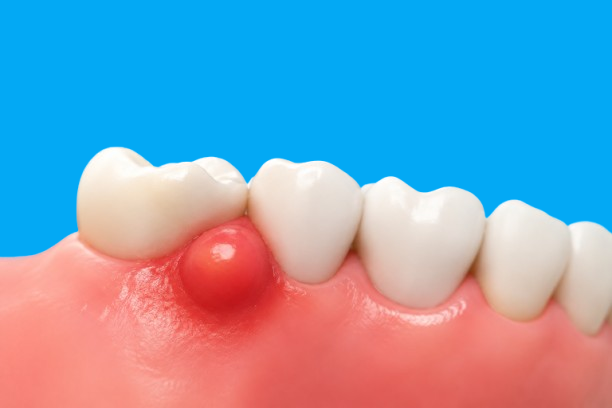
A single white spot could be a canker, minor trauma, early abscess, or healing wound. Sometimes a tiny cyst, irritation from dental appliances, or something more serious, like leukoplakia, is behind it. If there’s pain, swelling, pus, or a bad taste, especially near a tooth, it might be an abscess—see your dentist, don’t poke at it.
How To Tackle a White Dot on Your Gum
There’s no magic fix for all white spots—the right approach depends on the cause. But you can:
– Brush gently with a soft toothbrush.
– Keep your mouth clean but don’t try to scrape the area.
– Use warm salt-water rinses to soothe irritation.
– Avoid spicy, acidic, or hot foods and tobacco.
– Don’t apply whitening gels, peroxide, essential oils, or—seriously—aspirin.
Your dentist might suggest antifungal meds (for thrush), antibiotics, a cleaning, adjusting your dental appliance, or more tests based on what they find.
When Gums Look Grey or Blue
Grey patches can pop up during healing or after dental work, from reduced blood flow, or from certain materials. If your gums hurt, smell bad, or swelling gets worse, don’t wait for your next checkup.
Blue, brown, purple, or even black spots may just be how your natural pigment shows up—but a new bump, bruise, or dark spot that changes or bleeds is reason enough for a dental visit.

Is Anyone’s Teeth Really “Paper” White?
Nope. Real teeth have a bit of translucence—ivory, pale yellow, or gray is all healthy. Whitening doesn’t mean healthier teeth, and yellow doesn’t always mean dirty. Whitening is cosmetic; it doesn’t fix infections or gum disease.
What To Do If Gums Turn White after Whitening
Mild irritation? Stop whitening, rinse the area, stick to bland foods, skip alcohol-based mouthwash, and wait until everything feels normal before you try again. But if you see peeling, blisters, or the color sticks around, call your dentist.
Getting Gums Healthier Again
Here’s what really helps:
– Brush twice a day for two minutes with fluoride toothpaste.
– Use a soft-bristle brush.
– Clean between your teeth (floss or other cleaners) daily.
– Keep dentures squeaky clean if you wear them.
– Drink water.
– Quit tobacco—seriously.
– Eat less sugar.
– See your dentist regularly.
– Keep up with medical care if you have diabetes or other conditions.
So… When Do You Need a Dentist?
Book an appointment when:
– A white patch won’t budge after 2 weeks.
– An ulcer sticks around longer than 3 weeks.
– The area feels hard, thick, or rough.
– You can’t wipe it away.
– There’s ongoing pain, bleeding, numbness, or a loose tooth.
– You taste or see pus, or have trouble chewing or swallowing.
– The color change keeps coming back, or you’re unsure after surgery.
You shouldn’t gamble with anything that looks or feels abnormal for too long. If swelling starts to make breathing or swallowing hard, or the swelling is getting worse quickly, get to an emergency clinic.
Quick FAQs
Q. My gums are white around my teeth. What now?
Check if you’ve used whitening products, have plaque, or any pain or swelling. If it’s all over, sudden, or sticks around, make a dental appointment.
Q. Can a white gum spot mean infection?
Absolutely—especially with a bump, pus, throbbing pain, swelling, or if biting hurts. You’ll need a dentist to treat the infection.
Q. Will white, swollen gums just heal?
Mild irritation heals, but swelling can mean infection or injury. If it’s worsening or painful, don’t wait.
Q. Can pictures tell me what my white gums are?
Photos help describe what you see, but they can’t diagnose. Many mouth conditions look similar in pictures.
Q. Can white gums go back to pink?
Often, yes. If it’s from mild whitening irritation, minor injury, or after a procedure, gums can return to normal. If there’s an underlying issue, you have to treat that first.
Final Thoughts
White gums can mean a lot of different things—a tiny sore, overall paleness, a patch after healing, or something more serious. Instead of guessing, pay attention to how it feels, where it is, what’s happened lately, and how long it’s been there. Keeping your mouth clean is good, but unexplained or stubborn white patches, bad swelling, or ongoing pain all need a dentist’s or doctor’s care.
In the end, it’s always better to check early—let a pro look before internet diagnosis steers you wrong. Most problems are easier to fix before they get complicated.