A green patch on a tooth, a dark line where the tooth meets the gum, an odd tint on a child’s teeth: any of these sends people hunting for an explanation. Most green discoloration comes from bacteria, plaque, tartar, or something that stained the surface. Some of it traces back to an illness or a medicine taken in childhood, while the teeth were still forming.
The cause decides what removes the color. Brushing shifts some surface stains. Pigment sitting inside the tooth needs a dentist.
What is a green tooth?
A green tooth shows green, blue-green, or greenish-yellow discoloration. It may affect the whole tooth or only part of it, such as the gumline, the back of a tooth, or a chipped section.
When the color sits on the outside, bacteria, plaque, tartar, or colored food and drink are usually behind it. When it comes from inside the tooth, the cause is more often a medical condition or a medicine the person took while the tooth was developing.
The distinction shapes the treatment. Professional cleaning lifts many external stains. Internal pigment usually calls for cosmetic dental work.
A green spot is not automatically decay, but anything unusual or slow to fade deserves an exam so the cause is known.
What causes green stains on teeth?
1. Chromogenic bacteria
Some mouth bacteria make colored compounds that stick to tooth surfaces. They are behind many green stains, especially in children whose teeth are otherwise healthy. Their deposits range from green and yellow-green to brown or dark, and they gather most often near the gumline.
You may see green lines along the gums, color between the teeth, or staining on the back molars that ordinary brushing leaves behind. A professional cleaning usually takes the deposits off.
2. Plaque and tartar buildup
Skip brushing long enough and plaque builds up. It is a sticky film of bacteria, food particles, and saliva, and while it sits on the tooth it stains enamel and leads to bad breath, cavities, and inflamed gums.
Left in place, plaque hardens into tartar, also called dental calculus. Tartar picks up the color of whatever coats it, so it can look yellow, brown, green, or nearly black.
Dark yellow-green patches may be tartar or decay, and the two need different treatment. Let a dentist tell them apart instead of guessing.
3. Newborn jaundice and high bilirubin
Bilirubin is a yellow pigment the body produces when it breaks down old red blood cells. Babies with jaundice can carry high levels of it, and in some cases the pigment reaches teeth that are still forming, leaving a greenish tint.
This is uncommon. It can affect baby teeth and, depending on when the exposure happened, permanent teeth too. Conditions that put bilirubin this high include severe or long-lasting newborn jaundice, Rh and ABO blood group incompatibility, hemolytic anemia, and some liver or bile-flow problems.
Because the color sits inside the tooth, brushing and cleaning will not reach it.
4. Certain medications
Some medicines change tooth color when a child takes them during the years the teeth are developing. Tetracycline antibiotics are the best-known example, and a few other drugs cause unusual pigmentation in particular circumstances. The result may be yellow, gray, brown, or greenish.
If you think a prescribed medicine is staining your child’s teeth, talk to the prescriber or a dentist before changing anything.
5. Food, drinks, and tobacco
Coffee, tea, red wine, dark foods, and tobacco all leave marks on enamel over the years. Green tea gets blamed for tooth staining, and it does contain pigments and tannins that can build into a yellowish or brown film. Red wine does much the same with its strong pigments.
Neither drink is a usual cause of genuinely green teeth. If a green film appears after red wine, the color is more likely sitting in plaque or in pigmented bacterial deposits that were already there.
Why do children get green stains on their teeth?
Green stains turn up on children’s teeth more often than parents expect, sometimes as a thin line along the gums and sometimes as patches across several baby teeth. Most are external and bacterial, which explains why they can persist through regular brushing at home.
Internal discoloration happens too, particularly in a child who had severe newborn jaundice or another condition that affected tooth development.
Book an exam with a pediatric dentist. Until then, help your child brush twice a day with fluoride toothpaste suited to their age, clean between the teeth once there is room for floss or interdental brushes, and keep adult whitening products away from their mouth. Tell the dentist about any newborn jaundice or medicines the child has taken.
Skip the home remedies you may have read about. Lemon juice, abrasive powders, and household bleaching products damage developing teeth and irritate gums. The dentist can tell whether the stain sits on the surface or inside the tooth and treat it on that basis.
What does green around the gums mean?
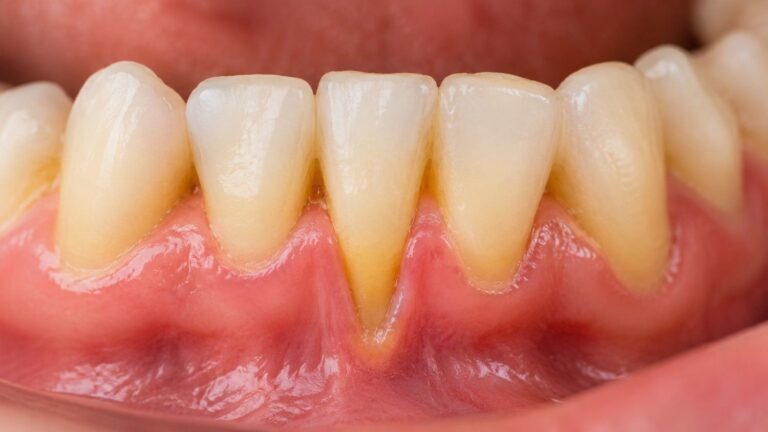
The gumline collects deposits because brush bristles do not always reach it cleanly. Green color there usually means plaque, pigmented bacteria, or hardened tartar.
Watch for a green line where the tooth meets the gum, yellow-green deposits on the back teeth, bad breath that lingers, gums that look swollen or red, and bleeding while brushing.
Most green marks near the gums are harmless. Bleeding gums, swelling, or ongoing soreness are not, and those need a dental visit. Brushing right along the gumline and cleaning between the teeth each day keeps plaque from settling there.
Green plaque on a wisdom tooth
Wisdom teeth sit far back in the mouth, which makes them hard to keep clean. A wisdom tooth that has only partly come through usually has a flap of gum over part of it, and food and bacteria collect underneath.
That trapped material can turn greenish. The usual culprits are pigmented bacteria, food caught around the tooth, surface stain, hardened tartar, and inflammation around a partly erupted tooth.
Clean the area gently with a soft brush and keep anything sharp away from the gum. If pain builds, or you notice swelling, pus, fever, or trouble opening your mouth, get dental care quickly. Those signs point to an infection called pericoronitis.
What does a green spot on a broken tooth mean?
A break in the enamel exposes dentin or leaves a pocket where food and bacteria gather, and color collects there. Sometimes the green comes from stain on the rough edge, sometimes from plaque caught in the fracture, sometimes from decay. An old filling can discolor too, as can changes inside the tooth after an injury. Brown, gray, and black are just as common on a broken tooth.
Pain, sensitivity, or swelling after a break means you need an exam. Depending on the damage, treatment may be bonding, a filling, a crown, or root canal therapy.
How to remove green stains from teeth
Treatment follows the cause. A stain on the surface is a different problem from pigment inside the tooth or from decay.
1. Professional dental cleaning
External green stains usually come off in the chair. A dentist or hygienist removes the plaque and tartar with dental instruments, clears deposits that have hardened onto the surface, then polishes the tooth. Color left by bacteria or by calculus is what this treatment handles best.
2. Brushing and flossing
Home care keeps new stains from settling in. Two minutes with fluoride toothpaste, twice a day, soft bristles, and enough attention to the gumline and the molars at the back, which are the spots most people skim. Floss or use interdental brushes once a day. If those areas are hard to reach, an electric brush does part of the work for you.
3. Whitening toothpaste
The mild abrasives in whitening toothpaste polish off light surface stain. Tartar and pigment inside the tooth stay where they are. Buy a tube meant for daily use, and press lightly. Scrubbing harder wears enamel without lifting more color.
4. Professional teeth whitening
Whitening done in a dental office lightens the natural tooth and improves some kinds of discoloration. It leaves tartar alone, does nothing for decay, and plenty of green stains will not respond to it at all. Find out what caused the color before booking the treatment.
5. Bonding, veneers, or crowns
When the color sits inside the tooth, cleaning will not change how it looks. Cosmetic options include dental bonding, porcelain veneers, and crowns, and your dentist will explain which suits the condition of the tooth. Any underlying problem gets treated before the cosmetic work.
How to whiten black-green teeth
Dark discoloration on a tooth has several possible sources: surface stain, hardened tartar, decay, an old restoration, pigment inside the tooth, or damage from an injury.
Professional cleaning helps if the color is on the surface. Decay needs treatment before anything cosmetic. Internal pigment may respond to professional whitening or need a restoration.
Do not put household bleach, concentrated hydrogen peroxide, or scouring powder on your teeth. They damage enamel and burn gum tissue.
When to see a dentist
Make an appointment for a green stain that will not go away, a single tooth that suddenly changes color, dark color around a broken tooth, bad breath that persists, gums that bleed or swell, sensitivity or pain, or green deposits around a wisdom tooth.
Get urgent dental care for facial swelling, fever with a suspected dental infection, or pus around a tooth. Trouble breathing or swallowing is an emergency.
At the visit, the dentist will examine the tooth, ask about your medical history, and take X-rays if they are needed.
How to prevent green tooth stains
Not every cause can be prevented, but hygiene cuts down on surface stains and plaque.
Brush twice a day with fluoride toothpaste, two minutes each time, covering every surface. Floss or use interdental brushes daily to clear the spots a brush misses. Drink water through the day, since it rinses food away and keeps saliva flowing. Cut back on smoking and chewing tobacco, both of which stain heavily and raise the risk of gum disease. Rinse with water after coffee, tea, or red wine. Keep regular checkups so tartar, early decay, and odd color changes get caught while they are small.
Frequently asked questions
Q. Why do my teeth have green stains?
Usually chromogenic bacteria, plaque, tartar, or another deposit sitting on the surface. Rarely, the color comes from inside the tooth and relates to a medical condition during tooth development.
Q. Are green stains on teeth permanent?
No. External stains often come off with a professional cleaning. Internal discoloration can be permanent and may need cosmetic dental treatment.
Q. Can poor oral hygiene cause green teeth?
Yes. Plaque left on the tooth surface holds colored bacteria, and their deposits give the tooth a green or yellow-green cast over time. Brushing irregularly is one of the most common reasons a stain appears in the first place.
Q. Can I remove green stains by brushing?
Light surface stains often come off with a toothbrush and a couple of weeks of consistency. Anything that has hardened onto the tooth will not shift at home, and that is where a dental cleaning comes in.
Q. Why does my child have green teeth?
Chromogenic bacteria and plaque are the usual reasons, with bilirubin exposure during tooth development a rarer one. A pediatric dentist can work out which applies.
Q. Can green tea turn teeth green?
Green tea contributes yellowish or brown surface stains through its pigments and tannins. It is not a typical cause of actually green teeth.
Q. Is green plaque on a wisdom tooth dangerous?
Not always. It may be surface stain or trapped food. Pain, swelling, pus, or fever suggest an infection that needs dental care.
Q. Can teeth whitening remove green discoloration?
Sometimes. Whitening lightens some kinds of discoloration. It does nothing for tartar that has hardened onto the tooth, and nothing for decay, so it is worth asking what caused the color before booking the treatment.
Final thoughts
Green teeth come from bacteria, plaque, and tartar, and occasionally from medical conditions that affect teeth as they form. Whether the color sits on the surface or inside the tooth decides what will work.
External stains often clear with a professional cleaning and steadier daily hygiene. Internal color usually needs a different plan.
If a green spot, gumline stain, or sudden color change shows up, skip the harsh home remedies and have a dentist identify the cause.
Medical Reference
1. Healthline – Green Tooth: Causes and Treatment
2. Colgate – What Causes Green Tooth and Other Tooth Discoloration?
3. Darren Chudds DDS – The Green Tooth